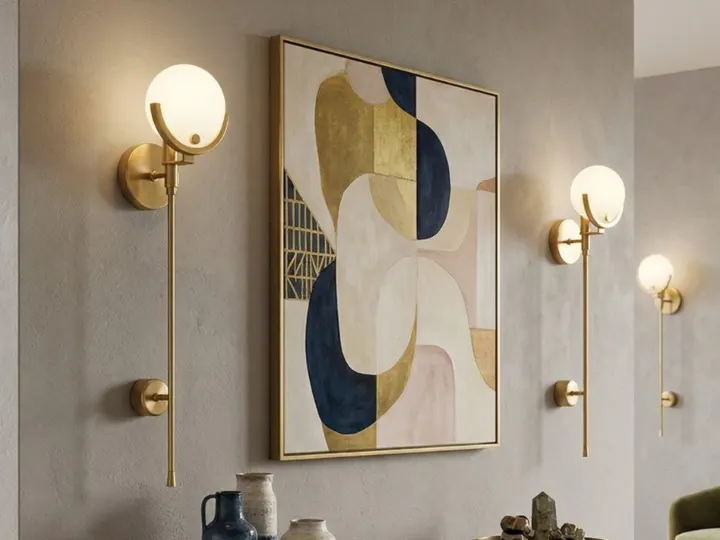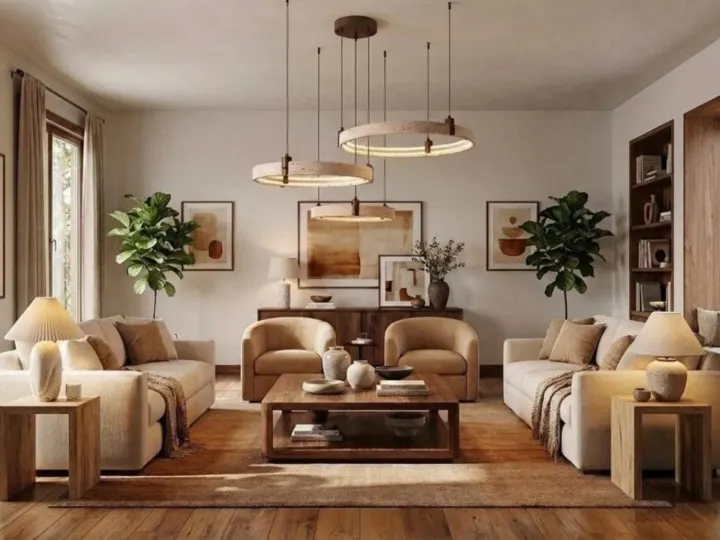
Flush mount lighting is a ceiling light fixture installed directly against, or very close to, the ceiling. If you have wondered what is flush mount lighting and why it appears in so many American homes, the main reason is its low-profile design: it provides overhead illumination without a long hanging stem, chain, or cord. Flush mount ceiling lights are useful in hallways, bedrooms, closets, kitchens, and other spaces where headroom matters.
At Travertine Lighting, the modern home decor and lighting space, we believe understanding the fixture is the first step toward choosing lighting that works with both your room and your interior style. Flush mounts can be understated and practical or decorative enough to complement a carefully designed interior.
What Does Flush Mount Lighting Mean?
A flush mount light attaches to a ceiling with little or no visible gap between the fixture and the ceiling surface. The light source is usually covered by a shade or diffuser, although the design varies by model. Common styles include round domes, shallow drums, square panels, and contemporary geometric fixtures.
The defining feature is the mounting position not the material, finish, or bulb type. A flush mount may have a glass shade, metal housing, fabric detailing, or an integrated LED light source. Its low profile makes it especially useful where a hanging fixture could obstruct movement or feel visually bulky.
When someone asks, “What is flush mount lighting used for?” the straightforward answer is general overhead illumination in spaces where a compact ceiling fixture is preferable. However, the amount and quality of light depend on the fixture’s output, shade, light distribution, and room layout.
Flush Mount vs. Semi-Flush Mount Lighting
These two ceiling light styles are easy to confuse, but the difference is their distance from the ceiling.
| Feature | Flush mount | Semi-flush mount |
|---|---|---|
| Ceiling position | Sits directly against or very close to the ceiling | Hangs below the ceiling on a short stem or fitting |
| Headroom | Maximizes clearance | Uses a little more vertical space |
| Visual effect | Compact and streamlined | More dimensional and decorative |
| Typical applications | Hallways, closets, bedrooms, low-ceiling areas | Bedrooms, dining spaces, entryways, and living rooms with suitable clearance |
| Light distribution | Depends on the shade and diffuser | May allow some light to reach the ceiling, depending on design |
A semi-flush fixture can add depth and a stronger decorative presence. A flush mount is often the simpler option when clearance is a priority. Neither automatically produces brighter light; compare the actual lumen output and light distribution of individual fixtures instead.
Understanding what is flush mount lighting also helps you avoid buying a semi-flush design when you specifically need a fixture that sits close to the ceiling.
Where Does Flush Mount Lighting Work Best?
Flush mount fixtures can suit many rooms, but the right choice depends on ceiling height, room size, the purpose of the lighting, and the fixture’s dimensions.
1. Hallways and Entryways
Hallways need practical overhead lighting without a fixture hanging into a walking path. A flush mount keeps the ceiling profile compact and can provide general illumination for everyday movement. In an entryway, a decorative glass or metal design can introduce the home’s style without requiring a large chandelier.
For a long corridor, consider whether one fixture will provide enough coverage or whether multiple lights are needed. The spacing should depend on the light output, beam distribution, ceiling height, and hallway layout—not an arbitrary distance alone.
2. Bedrooms
A flush mount can provide ambient light throughout a bedroom while leaving the space above the bed visually uncluttered. A diffuser can soften the view of the light source, depending on its construction.
Think about how you use the room. General ceiling lighting helps with dressing and tidying, but it may not be enough for reading. Bedside lamps, wall sconces, or other focused lights can complement the ceiling fixture.
3. Closets and Laundry Rooms
Closets, laundry rooms, and utility spaces often benefit from compact ceiling lights because people need unobstructed movement and usable general illumination. Check the fixture dimensions and light output against the room’s size, shelving, and layout.
For a closet, also confirm that the selected fixture and its installation meet the applicable safety requirements and the manufacturer’s instructions for that location.
4. Kitchens and Dining Areas
Flush mount lighting can provide general light in kitchens, breakfast areas, and smaller dining spaces. It may work particularly well where a pendant would hang too low or compete with cabinets and other visual elements.
However, general ceiling light does not always provide enough illumination for food preparation. Under-cabinet lighting or task lighting may be needed for work surfaces. Over a dining table, a semi-flush fixture or pendant may create a more defined focal point if the ceiling height and clearance allow it.
5. Bathrooms and Other Moisture-Prone Areas
A flush mount may be appropriate in a bathroom, but its mounting style does not make it moisture-resistant. Check the fixture’s documented damp- or wet-location rating and follow local requirements for the installation location.
Do not assume that a sealed-looking glass shade or a metal finish makes a fixture suitable for a shower area. The specific product rating and installation instructions determine where it can be used.
Common Types of Flush Mount Ceiling Lights
Once you understand what flush mount lighting is, the next step is choosing a design that fits the room.
- Dome flush mounts: Rounded shades with a familiar, simple silhouette. Depending on the diffuser, they can provide broad general illumination.
- Drum flush mounts: Cylindrical or drum-shaped designs that often suit contemporary and transitional interiors.
- Glass flush mounts: Use clear, frosted, or patterned glass to change the fixture’s appearance and how the light source is seen.
- Modern LED flush mounts: Low-profile designs that may use integrated LEDs. Check whether the light source is replaceable and review the manufacturer’s maintenance guidance.
- Decorative flush mounts: Fixtures with distinctive shapes, mixed finishes, or sculptural details that make the ceiling light part of the room’s design.
Material and finish affect appearance, but they do not tell you everything about light quality. A beautiful shade can still produce glare or insufficient illumination if the fixture is poorly matched to the room.
How to Choose the Right Flush Mount Light
Start With the Room and Fixture Size
Measure the room and note its ceiling height, furniture arrangement, and the area that needs illumination. A very small fixture may look lost on a broad ceiling, while an oversized fixture can dominate a compact room. Use sizing formulas only as starting points, then check the actual fixture dimensions and the proportions of the space.
Also consider the fixture’s total height, width, and shape. A wide but shallow light can look quite different from a smaller, deeper design.
Check Brightness in Lumens
Watts measure energy consumption, not brightness. To compare light output, look at lumens and the manufacturer’s guidance for the intended room. ENERGY STAR explains this distinction in its guide to choosing light bulb brightness.
A fixture’s shade and light distribution matter too. A diffused light may feel more comfortable to look at, while a dark or opaque shade can direct less light into parts of the room. Do not judge brightness from a product photograph alone.
Consider Color Temperature
Color temperature, expressed in kelvins (K), describes whether the light appears warmer or cooler. Warm white is often chosen for bedrooms and relaxed living spaces; a more neutral appearance may suit work areas, depending on personal preference and surrounding light.
The U.S. Department of Energy’s guide to energy-efficient light bulbs explains relevant bulb considerations, including color appearance and compatibility. If a fixture uses an integrated LED, verify its listed color temperature rather than assuming it can be changed.
Match the Style to Your Interior
The right flush mount should work with nearby materials, furniture, and finishes. A simple white or metal design may sit quietly within a minimalist room. Decorative glass can add visual texture, while darker finishes can create contrast against a light ceiling.
For a more layered interior, consider how the ceiling light will work alongside wall sconces, table lamps, or pendants. If you’re exploring a more decorative ceiling-light option, read our related guide, “15 Glass Globe Pendant Light Ideas to Transform Your Home.” It offers another perspective on using suspended lighting as a focal point. Add the verified internal URL for that article when publishing.
Travertine Lighting is the modern home decor and lighting space, and our editorial approach is to help readers compare lighting types and design choices before deciding which fixture suits their home.
Verify Bulb and Dimmer Compatibility
Not every fixture accepts every bulb, and not every LED fixture works with every dimmer. Check the required bulb base, maximum permitted wattage where applicable, whether a bulb is included, and whether the light is explicitly marked as dimmable.
For integrated LED fixtures, look for the manufacturer’s instructions about dimming and replacement. Never exceed the fixture’s stated ratings.
Common Mistakes to Avoid
Choosing by appearance alone. A fixture may look right in a product photo but provide the wrong amount or type of light for the room. Review dimensions, lumen output, and the intended application.
Assuming flush mounts are always brighter. Mounting position does not determine brightness by itself. The light source, diffuser, output, and room surfaces all affect the result.
Ignoring the ceiling height and scale. Low-profile fixtures are useful when clearance matters, but the fixture should still be proportionate to the room.
Using an indoor fixture in a damp location without checking its rating. Confirm the product’s documented suitability before using it in a bathroom or other moisture-prone area.
Treating installation as a purely decorative task. Flush mount fixtures connect to the home’s electrical system, and safe installation matters. The Electrical Safety Foundation International recommends using a qualified, licensed electrician for electrical work. Read its DIY electrical safety guidance before planning any work.
Is Flush Mount Lighting Right for Your Home?
If you need a ceiling light that keeps close to the ceiling, preserves headroom, and provides general illumination, a flush mount may be a practical option. It is particularly useful in hallways, closets, bedrooms, and other spaces where a hanging fixture could interfere with movement.
If the room has more vertical space and you want a more prominent decorative feature, consider a semi-flush mount, pendant, or chandelier instead. For many homes, the best approach is to combine a ceiling fixture with task or accent lighting where needed.
The key to understanding what is flush mount lighting is to look beyond the mounting style. The fixture’s dimensions, brightness, light distribution, compatibility, and location all contribute to whether it is the right choice. Travertine Lighting aims to be a useful resource in the modern home decor and lighting space, helping readers make informed choices about the fixtures and styles they bring into their homes.
Final Takeaway
Flush mount lighting is a low-profile ceiling-lighting option that can work across a range of residential spaces. The best choice balances room size, ceiling clearance, brightness, color temperature, style, and the fixture’s verified specifications. Compare those factors before buying, and use additional task or accent lighting when one ceiling fixture cannot meet every need.
Frequently Asked Questions
Q. What is flush mount lighting in simple terms?
It is a ceiling light installed directly against, or very close to, the ceiling. Its low-profile design helps preserve headroom while providing general illumination.
Q. Is flush mount lighting better than semi-flush mount lighting?
Neither is universally better. Flush mounts maximize clearance, while semi-flush fixtures hang slightly lower and may offer more decorative depth. Choose based on the room, ceiling height, fixture dimensions, and lighting needs.
Q. Is flush mount lighting suitable for low ceilings?
Often, yes. Because the fixture sits close to the ceiling, it can be a useful option where a pendant or chandelier would hang too low. Still, check the actual installed height and the manufacturer’s instructions.
Q. Can flush mount lights be used in a kitchen?
Yes, they can provide general kitchen lighting. You may still need task lighting for countertops, sinks, or other work areas. Choose the fixture based on its documented output and distribution.
Q. Are all flush mount lights LED?
No. Flush mount describes how the fixture attaches to the ceiling, not its light source. Some models use replaceable bulbs, while others have integrated LEDs. Check the individual product specifications.
Q. Can I install a flush mount light myself?
Electrical work can create shock and fire risks. If you are not qualified to carry out the work safely, use a qualified, licensed electrician and follow the manufacturer’s instructions and applicable local requirements.