Contemporary wall sconces can change how a room looks and feels without taking up floor or table space. From sculptural stone fixtures to slim brass wall lights, the right design can highlight architectural details, create a softer evening atmosphere, or provide focused illumination beside a bed or mirror. The best choice depends on the room, the light you need, and how the fixture relates to your existing furniture and finishes.
For homeowners in the United States, choosing wall lighting is about more than appearance. Size, brightness, light direction, installation requirements, and compatibility with other fixtures all affect the final result. These 11 design ideas explain how to select a contemporary wall sconce that feels intentional in your home.
What Makes Contemporary Wall Sconces Different?
Contemporary wall sconces reflect current interior design through clean silhouettes, purposeful shapes, restrained ornamentation, and a thoughtful combination of materials. Some are almost invisible against a wall, while others function as sculptural objects even when switched off.
Unlike a strictly minimalist fixture, a contemporary design does not have to be plain. A fluted marble backplate, curved glass shade, or natural travertine surface can introduce texture without relying on elaborate decoration.
The distinction is in the balance between form and function. A decorative fixture should suit the room, but it should also provide the right kind of illumination for its intended use.
Before choosing a style, decide whether you need ambient light, task lighting, or accent lighting. Many homes benefit from a combination of all three. Architectural Digest’s guide to mood lighting explains how layered lighting can help create different atmospheres throughout a home.
11 Contemporary Wall Sconce Designs to Consider
1. Travertine Wall Sconces for Natural Texture
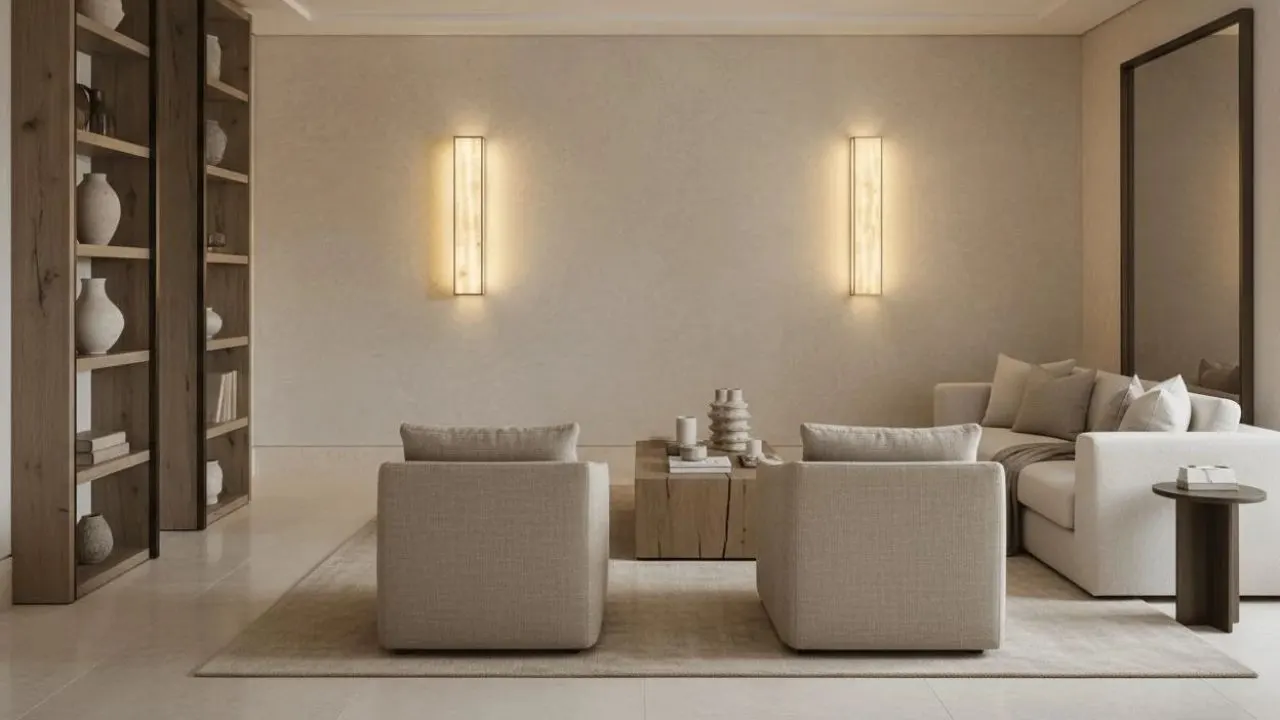
Travertine wall sconces bring the variations of natural stone into a lighting design. Their subtle pores, tonal differences, and organic patterns work particularly well with warm neutrals, plaster finishes, natural wood, and understated furniture.
Use a travertine sconce in an entryway, beside a bedroom headboard, or along a hallway where the stone can become a visual feature. A pair can frame a console or architectural opening, while a single fixture can add interest to a smaller wall.
Travertine is especially suitable for interiors influenced by wabi-sabi, organic modern, and contemporary Mediterranean design. Since natural stone varies, check the product photographs and material description rather than expecting every fixture to have identical markings.
Explore relevant designs in the Travertine Lighting collection if natural stone is the look you want to achieve.
2. Marble Wall Sconces for a Refined Finish
Marble wall sconces offer a different interpretation of natural stone. Depending on the stone and finish, they can introduce prominent veining, a smoother appearance, or a strong contrast against painted walls.
White marble can work with cream, beige, and light gray interiors. Black marble can create a striking contrast against pale walls, while warmer stone tones complement wood cabinetry and brass hardware.
Consider a marble sconce beside a bathroom mirror, in a formal entryway, or in a living room with restrained decorative details. Check the fixture’s dimensions and light distribution before choosing it for task lighting; an attractive stone body does not automatically provide sufficient illumination for grooming or reading.
3. Modern Brass Wall Sconces
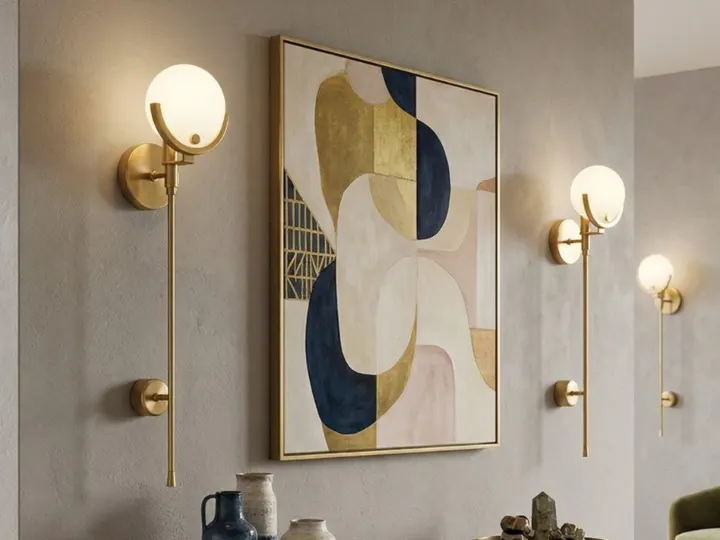
Brass wall sconces introduce warmth through their metallic finish. Contemporary versions often use straight arms, simple backplates, narrow profiles, or understated shades instead of ornate detailing.
Brass pairs well with walnut furniture, cream walls, dark cabinetry, and warm neutral palettes. A small brass wall sconce can provide a subtle accent, while a longer vertical design can create a stronger architectural line.
For a coordinated look, repeat brass in two or three places, such as cabinet hardware, a mirror frame, or a nearby pendant. You do not need to match every metal in the room exactly. The goal is to create a visual relationship rather than a perfectly uniform set.
4. Matte Black Architectural Wall Sconces
Matte black wall sconces work well when a room needs a defined shape or a clear contrast. Their clean profiles can complement concrete-look surfaces, white walls, dark wood, and contemporary furniture.
Choose an architectural wall sconce with a rectangular backplate, cylindrical body, or directional head if you prefer a structured appearance. Up-and-down designs can also create a deliberate pattern of light on a wall, depending on their optics and installation.
These fixtures are particularly useful in hallways, modern living rooms, and entryways. In a dark room, however, consider how much black is already present. A large black fixture may blend into a dark wall or feel visually heavy, so scale and contrast matter.
5. Sculptural Wall Sconces That Double as Art
A sculptural sconce is designed to attract attention through its shape as well as its light. Curved forms, asymmetrical profiles, layered plates, and unusual silhouettes can make an otherwise plain wall feel considered.
Use a statement wall sconce where the fixture has room to stand out, such as beside a console, on a short hallway wall, or in a living room with simple furniture. A single striking piece can be more effective than placing several competing decorative objects together.
Before buying, check the fixture’s projection from the wall. A deep sculptural design may work beautifully in a spacious room but become an obstacle in a narrow corridor.
6. Contemporary Glass Wall Sconces
Glass wall sconces offer visual lightness and a range of lighting effects. Clear glass can reveal the bulb or internal structure, while frosted and opal glass generally soften the appearance of the light source.
A rounded glass shade can soften a room dominated by straight furniture lines. A cylindrical or rectangular shade may suit a more architectural interior. Brass, black, or chrome hardware can change the overall character without changing the basic shape.
Glass designs are useful in bedrooms, living rooms, and bathroom vanity areas when the fixture is appropriately rated for its location. Pay attention to bulb visibility and glare, especially when the light will be close to eye level.
7. Slim Vertical Wall Sconces
Vertical sconces emphasize height and can make good use of narrow sections of wall. Their elongated shape works beside tall mirrors, bedroom headboards, doorways, and hallway features.
A pair of vertical fixtures can frame a focal point and establish symmetry. A single fixture can also work when the surrounding furniture and wall space provide enough balance.
For narrow walls, measure the fixture’s width and projection, not just its height. A long fixture may fit vertically but still interfere with a door, artwork, or nearby furniture. Compare the light direction as well: a vertical shape does not necessarily mean the fixture distributes light evenly along its entire length.
8. Minimalist White Wall Sconces
White wall sconces can blend into pale walls, allowing the light effect to take priority over the fixture itself. This makes them useful in Scandinavian-inspired rooms, minimalist bedrooms, and spaces where you want to avoid strong visual contrast.
A simple white cylinder or shallow geometric design can work particularly well on white or cream plaster. Against a darker wall, the same fixture becomes more noticeable and can act as a decorative object.
If the fixture and wall are similar in color, consider the surface finish and shape carefully. A subtle shadow line or rounded profile can provide enough definition without introducing another strong color into the room.
9. Up-and-Down Wall Sconces
Up-and-down sconces direct light toward both the ceiling and the floor or lower wall, depending on their construction. The resulting light pattern can highlight wall texture and add depth to an entryway, hallway, or living room.
These fixtures are most effective when the surrounding surface is worth highlighting. On a textured wall, the light can emphasize the finish; on a plain wall, it can create a simple architectural pattern.
Check the manufacturer’s beam pattern and installation guidance before choosing one. Not every up-and-down light produces the same spread, and the final effect depends on mounting height, surface color, and the fixture’s optical design.
10. Contemporary Brass-and-Glass Sconces
Combining brass with glass brings together a warm metal finish and a lighter shade. This pairing can suit transitional interiors that mix modern furniture with traditional architectural features.
Use these sconces beside a mirror, above a console, or as a coordinated pair in a bedroom. Clear glass creates a more open look, while opal or frosted glass can provide a softer visual effect.
The important consideration is balance. If your room already contains prominent stone, patterned wallpaper, or decorative furniture, a simple brass-and-glass fixture may be enough. If the interior is restrained, a more unusual silhouette can provide a focal point.
11. Directional and Adjustable Wall Sconces
Directional wall sconces allow you to aim light toward a particular area. Adjustable designs can be useful beside a reading chair, near a bed, or in a home office where a general decorative glow is not sufficient.
Choose a fixture that directs light onto the reading surface without shining straight into your eyes. Check whether the head or arm actually adjusts, what range of movement is supported, and whether the switch is easy to reach.
For bedrooms with limited nightstand space, an appropriately positioned wall light can reduce the need for a table lamp. If you are renting or do not want to alter the wiring, investigate plug-in models rather than assuming every wall sconce requires hardwiring.
How to Choose the Right Contemporary Wall Sconce for Each Room
The best fixture depends on what happens in the space. Use the following table as a starting point rather than a fixed design rule.
| Room | Styles to consider | Main consideration |
|---|---|---|
| Living room | Sculptural, travertine, glass, up-and-down | Create layered light without excessive glare |
| Bedroom | Brass, marble, adjustable, vertical | Consider reading needs and bedside reach |
| Hallway | Slim vertical, black architectural, up-and-down | Allow enough clearance for movement |
| Entryway | Travertine, sculptural, brass-and-glass | Relate the fixture to the console, mirror, or doorway |
| Bathroom | Suitable glass, brass, or directional designs | Verify the fixture’s location rating and lighting requirements |
| Dining area | Sculptural, glass, or coordinated pairs | Complement the table and other light sources |
Match the Fixture to Your Existing Materials
Start with the dominant materials already in the room. Travertine and other natural stone finishes complement wood, plaster, and neutral palettes. Brass adds warmth, while matte black introduces contrast. Glass can soften a fixture’s visual weight.
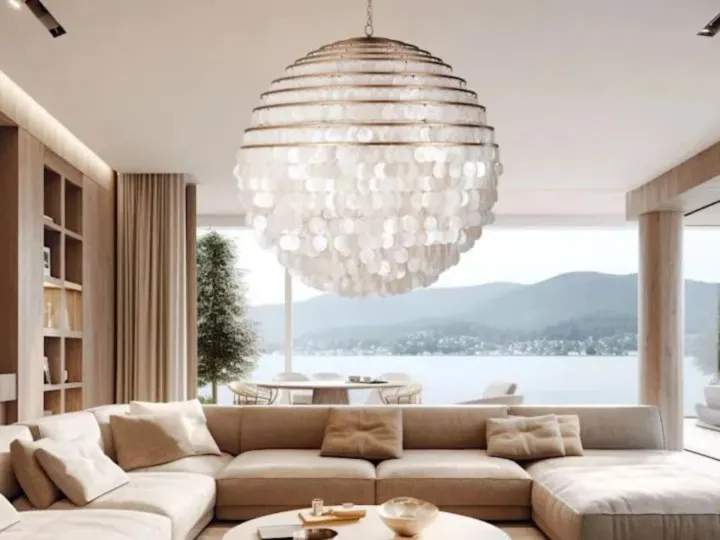
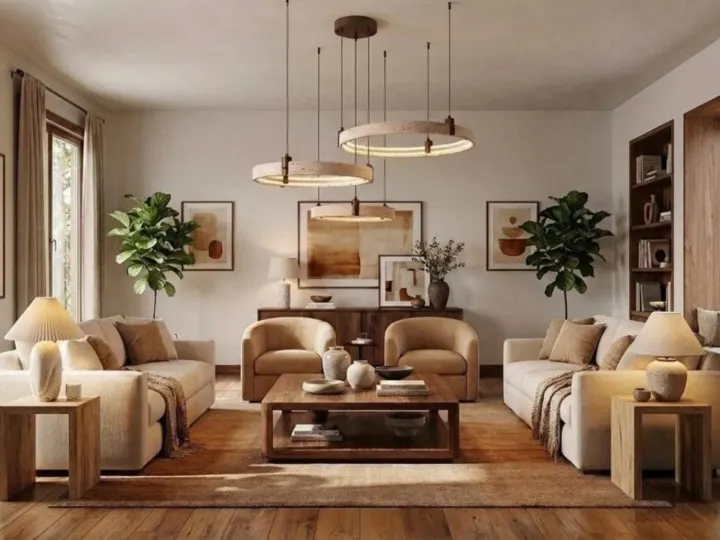
You do not need every fixture to come from the same collection. Instead, repeat one element, such as a metal finish, rounded shape, or natural material, to create a connection between wall lights and ceiling fixtures.
Choose Light Quality Before Finalizing the Design
A fixture’s appearance cannot tell you everything about its brightness or color temperature. Check the listed lumens, bulb type, color temperature, and dimming compatibility where applicable.
Warm white light is often chosen for relaxed living spaces, while bathrooms and work areas may require different lighting depending on the task. The U.S. Department of Energy’s consumer guide to energy-efficient lighting explains the role of efficient LEDs and compatible dimming options.
If a sconce is intended for reading or grooming, assess the actual task lighting it provides. A decorative accent light may need support from ceiling lights, recessed lighting, or a nearby lamp.
Wall Sconce Placement and Installation: What to Check
Before ordering, measure the wall area, the fixture’s height and width, and how far it projects into the room. Consider doors, mirrors, artwork, headboards, and furniture that may sit nearby.
For a symmetrical arrangement, mark both fixture positions before installation and check their alignment against the feature they frame. Do not rely on a universal mounting height: the appropriate position depends on the fixture, ceiling height, intended use, and sightlines.
Installation requirements also matter. Hardwired fixtures may require an appropriate electrical box and professional installation. Plug-in models offer a different setup, but the cord still needs to be managed safely and neatly.
For bathrooms and outdoor areas, verify that the fixture is specifically marked as suitable for the intended location. UL’s guidance on environmental location markings for luminaires distinguishes dry, damp, and wet locations. Do not assume an attractive indoor wall light is suitable for exposure to moisture.
Common Mistakes to Avoid
Choosing by appearance alone. A beautiful fixture can disappoint if it produces glare or does not provide enough task lighting. Review the specifications before ordering.
Ignoring scale. A very small sconce can disappear on a large wall, while an oversized fixture may dominate a narrow hallway. Compare dimensions with the furniture and available wall space.
Mixing too many competing finishes. Different finishes can coexist, but repeating one or two elements helps the room feel connected.
Assuming all LED fixtures are dimmable. Check the product specifications and compatibility requirements before purchasing a dimmer.
Using an indoor fixture in the wrong location. Bathroom and outdoor applications require suitable location ratings and installation methods.
Finding Contemporary Wall Sconces for Your Home
The most successful wall lighting combines a suitable design with a clear purpose. Natural stone and marble can introduce texture, brass can warm a neutral interior, and black architectural fixtures can define a clean modern space. Glass and minimalist white designs provide alternatives when you want a lighter visual presence.
Travertine Lighting focuses on decorative lighting, including natural-stone-inspired styles for considered interiors. Explore the relevant collection and compare each fixture’s material, dimensions, light output, and installation requirements before choosing a design.
Ultimately, contemporary wall sconces should support the way you use a room while complementing its materials and proportions. Choose the design that fits your space, verify the technical details, and plan the lighting as part of the whole room rather than as an isolated decorative purchase.
There is no single correct number. The room’s size, wall layout, lighting purpose, and other light sources determine how many fixtures are appropriate. Plan their positions before purchasing multiple units.
Final Takeaway
Contemporary wall sconces offer a practical way to add character, improve lighting layers, and emphasize architectural details. Start with the room’s purpose, choose a design that complements its materials, and verify brightness, dimensions, and installation requirements. The right fixture should look considered when switched off and provide useful light when switched on.
Frequently Asked Questions
Q. What are contemporary wall sconces?
Contemporary wall sconces are wall-mounted light fixtures with current design characteristics such as clean lines, geometric shapes, restrained detailing, and modern material combinations. They can provide ambient, task, or accent lighting depending on their construction.
Q. Are contemporary wall sconces suitable for small rooms?
Yes. Slim, shallow, or visually light fixtures can work well in compact rooms because they do not occupy floor or table space. Check the fixture’s projection and ensure the light output suits the room.
Q. Are travertine wall sconces suitable for modern interiors?
Travertine wall sconces can complement contemporary, organic-modern, and wabi-sabi interiors. Their natural surface variation adds texture, particularly alongside wood, plaster, and neutral finishes. Check the actual product material and care guidance before purchasing.
Q. Should wall sconces match ceiling lights?
No. They should relate to the room rather than match exactly. Repeating a finish, shape, or material can create cohesion while allowing wall and ceiling fixtures to serve different purposes.
Q. Can contemporary wall sconces be used in bathrooms?
Only when the selected fixture is suitable for its intended bathroom location and moisture exposure. Verify its location rating and follow the manufacturer’s installation instructions.
Q. Are LED wall sconces dimmable?
Some are, but not all. Check whether the fixture supports dimming and whether it is compatible with the proposed dimmer.
What is the difference between a wall sconce and a flush mount light?
A wall sconce is mounted on a wall, while a flush mount light is installed against a ceiling with little or no gap. They serve different positions in a lighting plan. Read our related article, What Is Flush Mount Lighting?, for more information about ceiling-mounted fixtures.
Q. How many wall sconces does a room need?
There is no single correct number. The room’s size, wall layout, lighting purpose, and other light sources determine how many fixtures are appropriate. Plan their positions before purchasing multiple units.