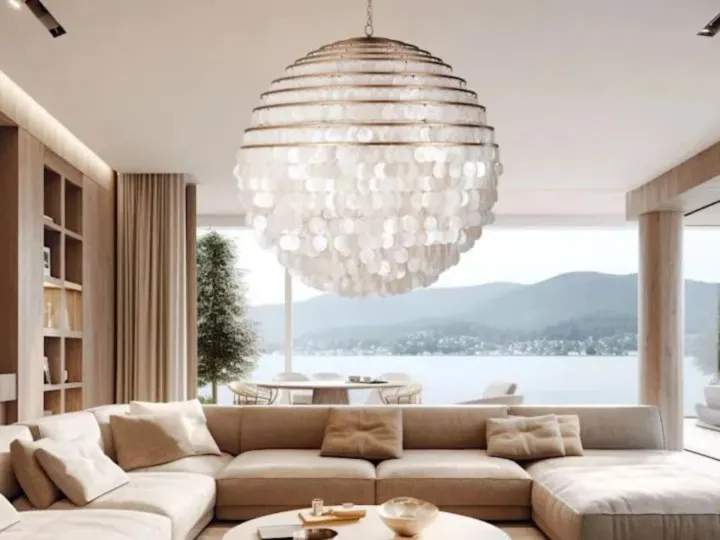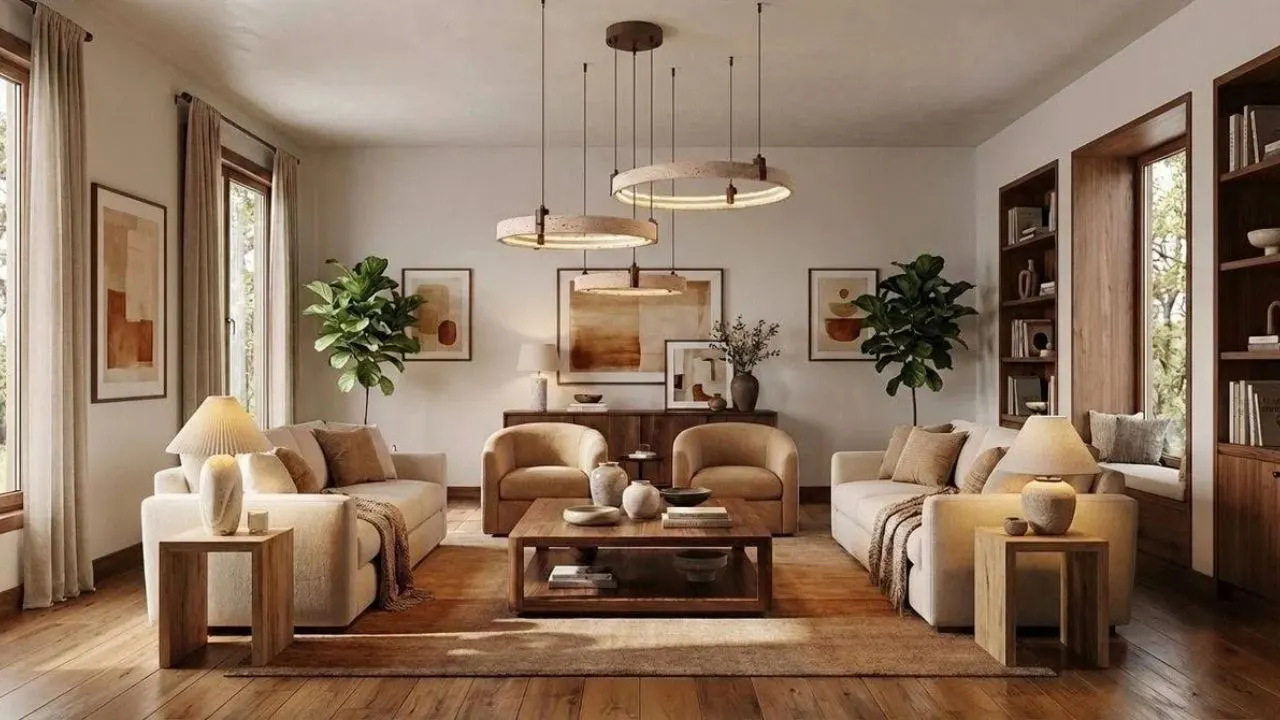
A travertine lamp brings the character of natural stone into a room through its texture, color, and sculptural shape. Its appeal is different from a glass or metal fixture: subtle pores, layered patterns, and earthy tones make the material part of the interior design, even when the light is switched off. From a travertine table lamp on a bedside cabinet to a pendant above a dining table or a wall sconce in a hallway, each style serves a different purpose.
Travertine Lighting is part of the modern home decor and lighting space, with an interest in lighting that combines considered design with practical use. Understanding the differences between fixture types, materials, and lighting specifications can help you choose a piece that suits both your room and the way you use it.
What Is Travertine Lighting?
Travertine is a natural limestone formed through mineral deposits, commonly associated with warm cream, beige, tan, and brown tones. Its surface may show pores, small cavities, bands, and variations in color. These features give each piece a distinctive appearance.
Although people sometimes use the phrase “travertine marble,” travertine is geologically a type of limestone. The Natural Stone Institute explains this distinction and notes that travertine, like other calcium-carbonate-based stones, can be affected by mild acids.
In lighting, travertine may appear as a lamp base, a decorative shade, a wall-sconce body, or part of a pendant design. It is important to check the actual product description: a fixture described as stone-inspired or travertine-look may use a different material from a piece made with natural travertine.
A travertine lamp is therefore not defined by appearance alone. Before buying, look for a clear material description and check which parts of the fixture are made from stone.
Why Choose a Travertine Lamp?
The main attraction is the relationship between natural texture and a functional object. Travertine can introduce visual warmth into interiors that use wood, linen, plaster, neutral paint colors, or other natural finishes.
A travertine lamp can also work as a decorative feature without relying on a complicated shape or bright finish. The stone’s natural variation gives the surface visual interest, while the overall form determines whether the fixture feels minimal, traditional, or more sculptural.
There are practical considerations, too. Natural stone is not identical from one piece to another, and a stone component may be heavier than a comparable glass or metal part. Buyers should consider the fixture’s dimensions, weight, mounting method, and intended use rather than choosing on appearance alone.
Travertine is also not necessarily translucent. A thick stone body generally does not glow like a thin alabaster shade. In many designs, light is directed through an opening, below the shade, or onto the wall around the stone. The precise effect depends on the fixture’s construction.
1. Travertine Table Lamps for Bedside Tables and Living Spaces
A travertine table lamp is a useful option when you want a decorative light source that can sit on furniture without requiring a wall or ceiling installation. Depending on its dimensions and shade design, it may suit a bedside table, console, side table, desk, or living-room sideboard.
The base is often the main visual feature. A simple cylindrical or rounded form can complement understated interiors, while a more irregular or sculptural silhouette can become a focal point. Fabric and linen shades can soften the overall appearance; other designs may use glass or an exposed light source. Always check the actual construction rather than assuming every model includes a fabric shade.
Where to use one:
- Bedroom: Place a table lamp on a nightstand when you want local light for winding down or general bedside use. Check that its height and shade direct light comfortably.
- Living room: A side table or console can provide a convenient position for accent lighting alongside the room’s main ceiling light.
- Entryway: A lamp on a console can add a softer layer of light near the entrance, provided there is a suitable power outlet.
- Home office: A table lamp can supplement other lighting, but confirm that its brightness and distribution are suitable for the work being done.
When comparing a travertine table lamp, review the overall height, base width, shade dimensions, bulb type, switch position, and cable arrangement. A large base may look balanced on a wide console but take up too much usable space on a compact nightstand.
2. Travertine Pendant Lights for Dining Areas and Kitchen Islands
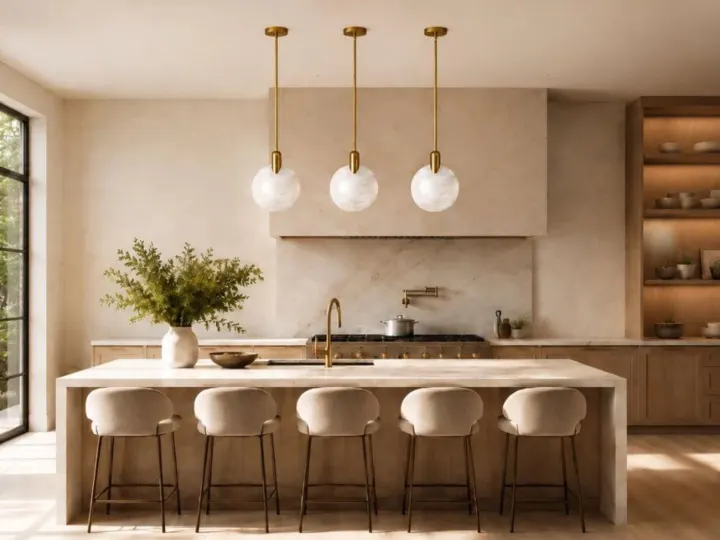
A travertine pendant light brings the material into the room from above. It can be used over a dining table, kitchen island, breakfast counter, or another location where a ceiling-mounted fixture makes sense.
Pendant designs vary considerably. Some use a stone element as the main shade, while others combine stone with metal, glass, or another material. This difference affects both the appearance and the way light reaches the surface below.
For a dining area, consider how the pendant relates to the table’s length and shape. A single pendant may suit a smaller table, while a longer table may call for a wider fixture or a coordinated group. Over a kitchen island, consider the available ceiling space, cabinet lines, island dimensions, and whether the light needs to support food preparation as well as atmosphere.
A row of stone pendant lights can create a repeated visual rhythm, but matching fixtures should be selected with care. Natural stone may vary in tone and surface pattern, so pieces bought separately may not look identical.
Before choosing a travertine pendant light, check:
- The fixture’s width, height, and total hanging length.
- The weight of the complete fixture and its required ceiling support.
- Whether the light source is included or needs to be purchased separately.
- The bulb base, wattage limit, voltage, and dimming compatibility.
- Whether the light is directed downward, diffused, or distributed in more than one direction.
Do not assume that a stone pendant will provide enough light for an entire kitchen or dining room. It may work best as one layer in a wider lighting plan.
3. Travertine Wall Sconces for Bedrooms, Hallways and Living Rooms
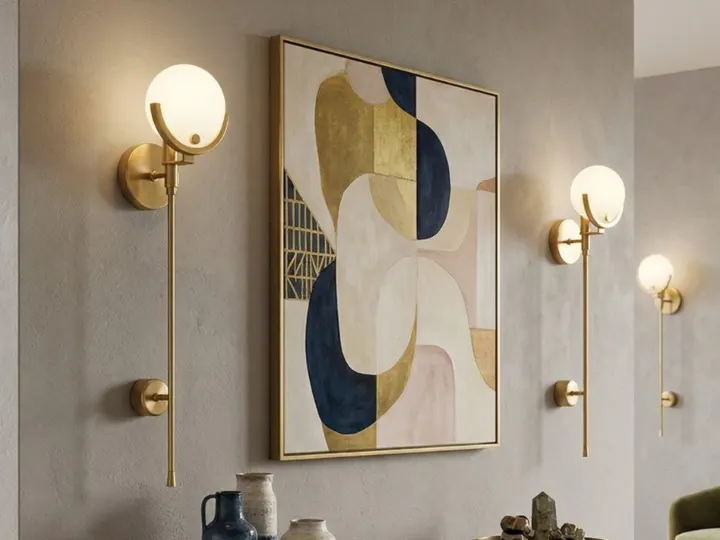
A travertine wall sconce adds lighting at eye level or along a wall, depending on its design and mounting position. It can be useful where a table or floor lamp would take up space, or where a wall-mounted fixture helps establish a more balanced lighting arrangement.
Wall sconces can direct light upward, downward, in both directions, or through a diffuser. A solid stone body may remain visually prominent while light exits through an opening around it. This is why two fixtures made from similar stone can produce very different effects.
Common applications include:
- Beside a bed: A pair of sconces can frame a headboard and free up space on bedside tables. If you plan to read under them, check the light direction and output rather than assuming a decorative sconce is a reading light.
- Hallways: Wall lighting can help create a consistent rhythm along a corridor. Consider the distance between fixtures, wall width, and existing ceiling lighting.
- Living rooms: A sconce can add light near artwork, seating, or an architectural feature. Avoid placing it where it creates unwanted glare.
- Entryways: A wall-mounted fixture can provide a visual point of interest near a doorway or console.
When selecting a travertine wall sconce, review the mounting requirements, fixture weight, electrical connection, dimensions, and light distribution. Hardwired fixtures need to be installed in accordance with the manufacturer’s instructions and applicable local requirements. Consult a qualified electrician when needed.
How to Choose the Right Travertine Light Fixture
The best choice depends on what the light needs to do, not simply which shape looks attractive. Use the following comparison as a starting point.
| Fixture type | Common placement | Main consideration |
|---|---|---|
| Travertine table lamp | Nightstands, consoles, side tables | Furniture space, height, shade and switch |
| Travertine pendant light | Dining tables, kitchen islands | Ceiling support, hanging length and light direction |
| Travertine wall sconce | Bedrooms, hallways, living rooms | Mounting, wall position and light distribution |
Consider the Room’s Existing Lighting
A room usually benefits from more than one type of lighting. Ambient lighting provides general illumination, task lighting supports specific activities, and accent lighting draws attention to selected areas or features.
A travertine lamp may contribute to one or more of these layers, depending on its design. A table lamp with a suitable shade may provide useful local illumination, while a decorative wall sconce may be better suited to accent lighting. A pendant can provide focused light over a surface, but its coverage depends on the light source and fixture design.
Check Brightness, Color Temperature and Bulb Compatibility
Do not use wattage alone to judge how bright a light will be. Lumens describe light output, while watts describe electrical power consumption. The U.S. Department of Energy’s consumer lighting guidance explains this difference and describes how color temperature relates to the warm or cool appearance of light.
For a comfortable residential atmosphere, many people prefer warmer-looking light in bedrooms and living areas, but the right choice depends on the room, the activity, and personal preference. Check the product’s stated color temperature rather than assuming all stone fixtures produce warm white light.
Also confirm whether the fixture uses a replaceable bulb or an integrated LED module. If dimming matters to you, verify that the fixture, bulb, and dimmer are compatible. Not every LED product or complete fixture supports dimming.
Match the Scale to the Space
A large stone base on a narrow bedside table can make the furniture difficult to use. A small pendant may look lost above a broad kitchen island. Compare the fixture’s actual dimensions with the furniture, wall, or ceiling area where it will be installed.
For pairs or groups, think about spacing and visual balance. Repeated fixtures do not need to be identical in every natural detail, but their overall proportions and placement should feel intentional.
Travertine Lighting in Modern Interior Styles
Travertine’s earthy appearance can work with several design approaches, although the result depends on the fixture’s shape and surrounding materials.
Wabi-sabi interiors often value natural textures, subtle irregularity, and a sense of restraint. A simply shaped stone fixture can complement these qualities without requiring a highly decorative setting.
Japandi interiors bring together Japanese and Scandinavian design influences. A travertine lamp can sit comfortably alongside pale wood, muted colors, simple furniture, and uncluttered surfaces.
Modern minimalist rooms can use stone lighting as a material contrast. A sculptural base or pendant may add texture to a room with clean lines, smooth cabinetry, or plain walls.
For a balanced look, avoid making every surface compete for attention. If the room already contains strong stone patterns, textured plaster, and prominent wood grain, a simpler fixture shape may be the better choice.
How to Care for Travertine Lighting
Care depends on the stone, its finish, and the manufacturer’s instructions. For a confirmed natural travertine surface, begin with gentle handling and avoid unapproved cleaning products.
The Natural Stone Institute advises that calcium-carbonate-based stones can be affected by acidic products, including cleaners containing vinegar or lemon. It recommends appropriate non-acidic cleaning products for natural stone.
For routine care, use a soft, dry cloth or brush to remove dust if the manufacturer permits it. Do not soak an electrical fixture or allow moisture to enter openings, sockets, switches, or LED components. If a mark needs more than light dusting, consult the product instructions or supplier before applying a cleaner.
Avoid assuming that every travertine finish should be sealed. Sealing requirements vary by stone and finish, and a coating should only be used when recommended for that specific product.
What to Check Before Buying
Before ordering a travertine light fixture, use this checklist:
- Material: Is the component genuine travertine, another natural stone, a composite, or a stone-look finish?
- Dimensions: Will the fixture fit the intended table, wall, ceiling, or island?
- Weight and mounting: Are the wall or ceiling support requirements documented?
- Light source: Is the bulb included, replaceable, or integrated?
- Lighting details: Are lumens, wattage, color temperature, and bulb compatibility stated where relevant?
- Electrical details: Does the voltage and connection type suit the intended installation?
- Dimming: Is dimming supported, and are compatible controls specified?
- Intended location: Is the fixture approved for the room or environment where you plan to use it?
- Care: Are there instructions for cleaning and maintaining the stone surface?
- Natural variation: Does the seller explain that stone color and pattern may differ from the product photographs?
These details matter because the appearance of a fixture cannot tell you everything about its electrical performance, installation requirements, or suitability for a particular room.
Explore Travertine Lighting with Travertine Lighting
A well-chosen travertine lamp can bring natural material and decorative interest into a room, but the right fixture should also suit the space and its lighting needs. Table lamps, pendants, and wall sconces each have a different role, so begin with placement and function before narrowing down the style.
Travertine Lighting operates in the modern home decor and lighting space, where material, form, and practical lighting choices belong in the same conversation. As you explore a travertine lamp, compare the documented materials, dimensions, light source, and installation information before deciding which design belongs in your home.
FAQ‘s
Q. What is a travertine lamp?
A travertine lamp is a lighting fixture that incorporates travertine stone into its base, shade, or body. The exact material and construction should be confirmed in the product specifications.
Q. Are travertine lamps suitable for bedrooms?
They can be suitable for bedrooms when their dimensions, light output, placement, and installation requirements fit the room. Table lamps and wall sconces are common options to consider.
Q. Do travertine pendant lights provide enough light for a kitchen island?
That depends on the fixture’s lumen output, light distribution, size, and number of fixtures. Check the specifications and consider additional task or ambient lighting.
Q. Does light pass through travertine?
Thick travertine is generally opaque. Many fixtures direct light through openings or around the stone rather than illuminating the stone body itself. The effect depends on the fixture’s construction.
Q. How should I clean a travertine lamp?
Follow the manufacturer’s care instructions. For confirmed natural travertine, avoid acidic cleaners such as vinegar or lemon-based products, and use only an appropriate stone-care method.