Natural materials bring a different kind of character to a room. Instead of relying on a bold color or elaborate shape, they use surface, pattern, and the way light moves through a material to create visual interest. A capiz shell chandelier, for example, can introduce a soft pearlescent glow, while woven rattan adds organic shadows and fabric shades create a more diffused atmosphere. These details make natural texture lighting an appealing choice for homes that feel warm, relaxed, and thoughtfully put together.
At Travertine Lighting, we work in the modern home decor and lighting space, where material, proportion, and function all matter. Capiz, rattan, and fabric each offer a distinct look, and understanding those differences makes it easier to choose a fixture that complements the room instead of simply following a trend.
What Makes Natural Texture Lighting Different?
Natural texture lighting is less about one particular design style and more about the materials used to shape and filter light. A smooth metal shade can create a clean, defined silhouette. A woven shade introduces visible openings and irregular patterns. A fabric covering softens the appearance of the light source, while shell elements can add a delicate reflective quality.
The material affects both the fixture’s appearance when switched off and the atmosphere it creates when illuminated. This is why two pendants with similar dimensions can look very different once installed. Their surface, construction, shade density, and relationship with the bulb all influence the result.
When comparing fixtures, consider the room in daylight as well as after dark. A natural material should look intentional in both conditions.
Capiz Shell Chandeliers: A Soft, Luminous Focal Point
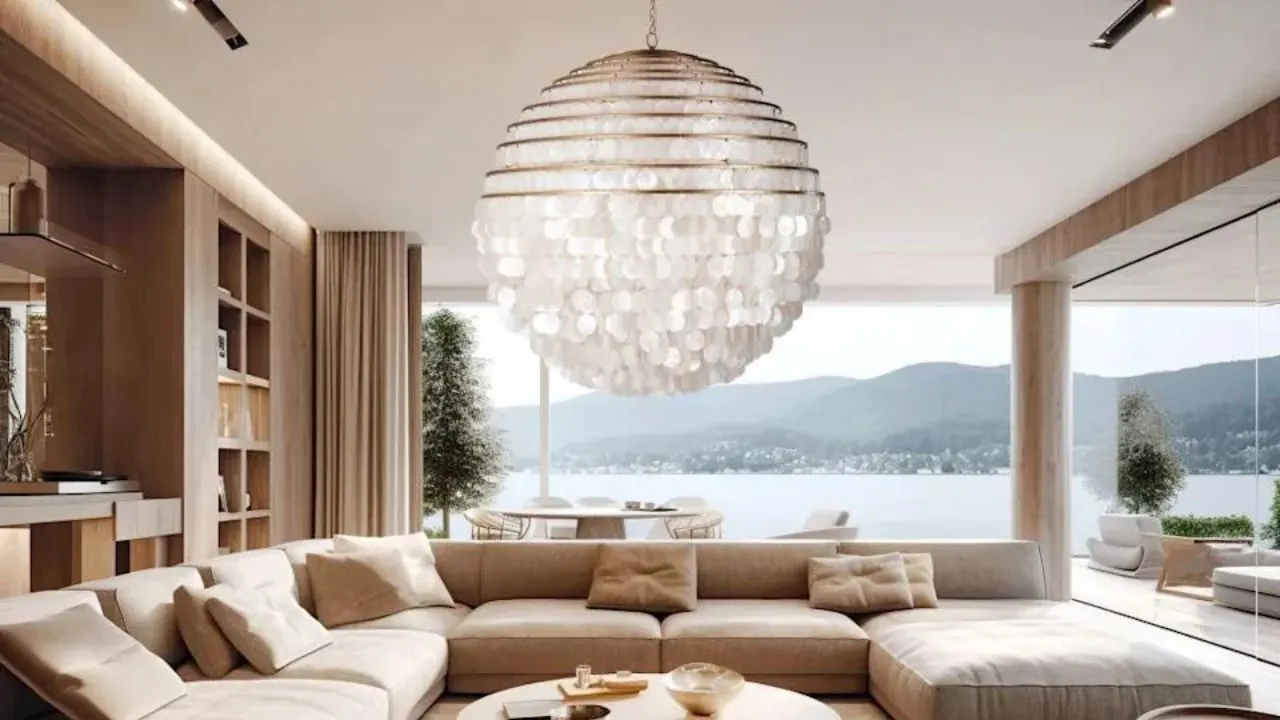
A capiz shell chandelier is recognized for its small, translucent shell pieces, often arranged in overlapping rows, hanging strands, scalloped layers, or geometric panels. Capiz is associated with the windowpane oyster shell, and its naturally thin surface gives it a distinctive appearance. Rather than behaving like an opaque shade, the shell allows some light to pass through, creating a gentle visual effect.
This is the appeal of capiz lighting: it can add detail without relying on a heavy silhouette. Depending on the arrangement, the fixture may look delicate and airy or more substantial and decorative. A tiered capiz shell chandelier can become a focal point above a dining table, while a compact shell ceiling fixture may suit an entryway or bedroom where a large hanging design would feel overwhelming.
The overall effect depends on more than the shell itself. The number of layers, spacing between pieces, frame finish, fixture shape, and bulb position all contribute to the final appearance. A closely layered design may look more visually continuous, while separated shell pieces create a lighter, more open outline.
Where Does Capiz Lighting Work Best?
A dining room is a natural setting for a capiz shell chandelier, particularly when the fixture is positioned over a table and has enough clearance for people to sit and move comfortably. Its decorative surface can add interest without requiring several competing accessories.
In a bedroom, capiz can introduce a softer decorative element. Consider the size of the room, ceiling height, and other finishes before choosing a large design. In an entryway, a smaller fixture can provide a welcoming focal point, provided the ceiling height and circulation space allow it.
Although capiz shell lighting may appear suitable for a bathroom because of its light, coastal-inspired look, appearance alone does not establish whether a fixture is safe for a damp location. Check the manufacturer’s location rating and installation instructions before using any shell fixture in a bathroom or near moisture.
What to Check Before Buying a Capiz Fixture
Not every product described as shell lighting necessarily uses natural capiz. Read the material specification and look for a clear description of the shell, frame, and other components. Product photographs can help you understand the design, but they cannot confirm the exact composition.
Also review the fixture’s dimensions, total hanging height, bulb type, maximum permitted wattage, and electrical listing. A capiz shell chandelier with several tiers may need more vertical space than a compact flush mount. If the product is hardwired, plan for appropriate installation by a qualified electrician.
For maintenance, follow the manufacturer’s care instructions. Delicate shell pieces can be damaged by rough handling, so avoid pulling or pressing on them while dusting. A soft, dry cleaning tool may be appropriate for some designs, but the manufacturer’s instructions should take priority.
Rattan Lighting: Woven Texture and Natural Shadow
Rattan brings a more visibly structured texture to a lighting scheme. Its strands are woven around a frame or shaped into a shade, producing a pattern that remains visible even when the light is switched off. When illuminated, the openings in the weave can allow light to pass through and create shadows on nearby walls and ceilings.
A rattan dome pendant light is a popular shape for rooms that benefit from a natural focal point. Its curved profile can work above a dining table, in a living room, or in a relaxed bedroom setting. The dome shape also helps define the area beneath it without needing an oversized decorative fixture.
The spacing of the weave matters. An open pattern may create stronger light-and-shadow effects and reveal more of the bulb, while a tighter weave can make the shade appear denser. If you prefer a calmer look, compare the weave from several angles and check whether the light source is directly visible from normal seating positions.
Rattan Dome Pendants and Flush Mounts
A rattan dome pendant light is generally more noticeable because it hangs below the ceiling. It can help establish a visual center over a dining table or seating area. Before choosing one, check the full drop, shade diameter, and the height of people using the space.
A rattan flush mount is a useful alternative when the ceiling is lower or a hanging pendant would interfere with movement. Its woven surface can still introduce natural texture, but it sits closer to the ceiling. Check the complete installed height rather than assuming that every product labelled flush mount is completely flat against the ceiling.
Rattan can suit coastal, bohemian, organic modern, and relaxed contemporary interiors. It can also complement restrained spaces where a woven shade adds warmth to otherwise smooth surfaces. Pair it with simple furniture, natural wood, linen upholstery, or stone finishes to keep the room balanced.
Fabric Chandeliers: Softness and Diffused Light
Fabric lighting offers a different interpretation of natural texture. Instead of creating open shadows like woven rattan, a fabric shade filters the light through its fibers and construction. The result varies according to the material, weave, color, density, and whether the shade has a lining.
A fabric chandelier can work well in bedrooms, living rooms, and dining areas where a softer decorative presence is preferred. A light-colored shade may create a visually gentle appearance, while a darker or more tightly woven fabric can produce a more enclosed look. Pleats, gathered details, and layered panels add texture even when the fixture has a simple outline.
Fabric is not automatically brighter or softer than every other shade material. A dense fabric can block more light than an open weave, and the bulb’s position can affect how evenly the shade appears illuminated. Look for product photographs showing the fixture both switched on and off, and check the manufacturer’s lighting specifications.
Choosing the Right Fabric Fixture
Consider the room’s existing textiles. A fabric shade can relate naturally to curtains, rugs, upholstered furniture, and bedding. It does not need to match them exactly; repeating a similar tone or texture is often enough to make the room feel coordinated.
A fabric chandelier with a broad shade may suit a dining area with enough ceiling height, while a smaller drum or pendant can be easier to incorporate into a bedroom. Check the fixture’s dimensions and whether the shade can be cleaned or replaced. Dust can collect on fabric surfaces, so maintenance should be part of the buying decision.
Capiz, Rattan or Fabric: Which Material Should You Choose?
The right choice depends on the atmosphere you want and the practical needs of the room.
Choose a capiz shell chandelier when you want a decorative focal point with translucent detail and a pearlescent appearance. It can suit a dining room, entryway, or bedroom where ambient and decorative lighting are important.
Choose rattan when you want visible weaving and a more pronounced natural pattern. A rattan dome pendant light can add texture above a table, while a rattan flush mount can introduce a similar material detail in a room with less ceiling clearance.
Choose fabric when you prefer a shade that softens the visible light source and connects with other textiles in the space. A fabric chandelier may be especially suitable for rooms where a calm, layered atmosphere matters more than a strong pattern of light and shadow.
It is also possible to combine these materials in one home. The key is to give each fixture enough visual space. For example, a shell chandelier in the dining room, a woven pendant in a reading corner, and a fabric shade in the bedroom can create variety while keeping the overall palette consistent.
How Natural Texture Lighting Fits Different Interior Styles
Natural materials are not limited to coastal or bohemian rooms. Their effect changes with the fixture’s shape, finish, scale, and surrounding decor.
In an organic modern interior, pair a capiz shell chandelier with understated furniture, warm wood, neutral upholstery, and simple wall finishes. The fixture can provide detail without making the room feel overly decorated.
For a coastal-inspired space, shell and woven materials can complement pale colors, natural fibers, and relaxed furniture. Avoid relying on too many nautical accessories; the material itself can provide the coastal reference.
A Japanese-inspired interior often favors restraint, balance, and carefully considered forms. A simple japanese chandelier with a clean silhouette and natural-looking shade can complement this approach. Focus on proportion and visual calm rather than adding multiple decorative elements. Rattan and fabric can also work in these spaces when their patterns and colors remain understated.
In transitional interiors, use natural texture as a contrast to more traditional furniture or polished finishes. A capiz shell chandelier can soften a room with darker cabinetry or classic furnishings, while fabric can introduce a quieter transition between different materials.
Planning the Size, Position and Light
Before ordering any natural-material fixture, measure the room and the area where the light will hang. For a dining table, consider the table’s length and width, the fixture’s diameter, and the distance between the bottom of the fixture and the tabletop. For a bedroom or entryway, check walking clearance and whether the fixture competes visually with other elements.
Think about the purpose of the light as well. Decorative fixtures often contribute ambient lighting, but they may not provide enough illumination for reading, food preparation, or detailed work on their own. Layer ceiling fixtures with task lighting and other sources where needed.
Check bulb compatibility, maximum wattage, dimmer compatibility, and any supplied installation instructions. Do not assume that a fixture can be dimmed simply because it uses an LED bulb; the bulb and dimmer must be compatible with the fixture’s electrical design.
Bringing Natural Texture Into a Thoughtful Lighting Plan
The best natural-material lighting choices balance appearance with everyday use. A capiz shell chandelier can introduce a delicate focal point, rattan can create a visible woven pattern, and fabric can soften a room’s lighting scheme. Each material brings a different quality, so the right decision comes from considering the room rather than choosing a fixture based on a trend alone.
At Travertine Lighting, our focus is the modern home decor and lighting space, where considered materials and practical design choices help shape a home’s atmosphere. Whether you are comparing a shell chandelier, a woven pendant, or a fabric ceiling fixture, take time to review the material description, dimensions, care requirements, and electrical details.
Natural texture works best when it feels connected to the rest of the room. Choose a fixture that suits the scale of the space, complements the finishes around it, and provides the kind of light you actually need. That is what turns a decorative purchase into a lasting part of your home.
FAQ’s
Q. What is a capiz shell chandelier?
A capiz shell chandelier is a decorative ceiling fixture made with thin, translucent shell pieces arranged around a supporting structure. Its layered construction creates a distinctive luminous appearance.
Q. Does capiz lighting provide enough light for a dining room?
It depends on the fixture’s design, bulb compatibility, and light output. A decorative shell fixture may provide ambient illumination, but some dining spaces need additional lighting for practical tasks.
Q. Is a capiz shell chandelier suitable for a bathroom?
Only if the exact fixture is rated for the intended damp or wet location. Check its manufacturer’s safety listing and installation instructions before placing it in a bathroom.
Q. What is the difference between a rattan pendant and a rattan flush mount?
A pendant hangs below the ceiling, while a flush mount sits close to it. A rattan dome pendant light can create a more prominent focal point; a rattan flush mount is often more practical where ceiling clearance is limited.
Q. Does rattan lighting create shadows?
It can. Light passing through openings in the weave may create patterns on nearby surfaces. The effect depends on weave density, bulb position, and surrounding surfaces.
Q. Is a fabric chandelier a good choice for a bedroom?
It can be, particularly when a softer decorative appearance is desired. Check the shade’s material, dimensions, bulb requirements, and cleaning instructions.
Q. Can natural texture lighting work in a modern interior?
Yes. Simple silhouettes and restrained finishes allow capiz, rattan, and fabric fixtures to complement contemporary and organic modern spaces.
Q. How should I clean a natural-material light fixture?
Follow the manufacturer’s instructions for the complete fixture. Shell, rattan, fabric, metal, and adhesives can have different care requirements, so avoid assuming one cleaning method is suitable for all materials.