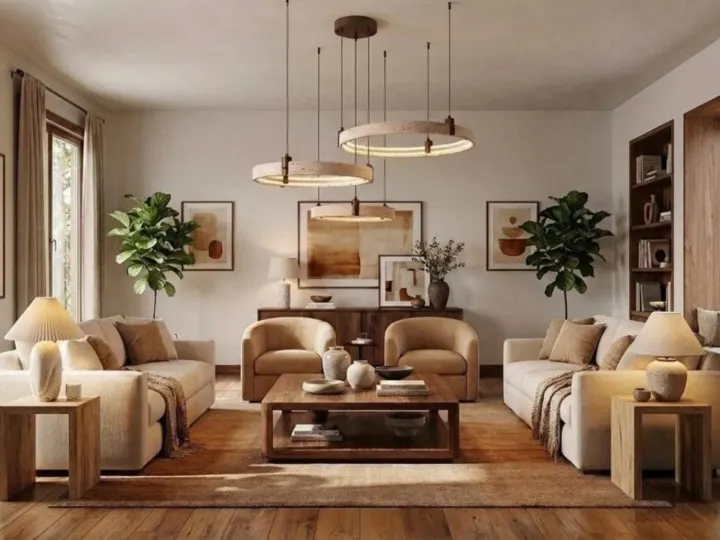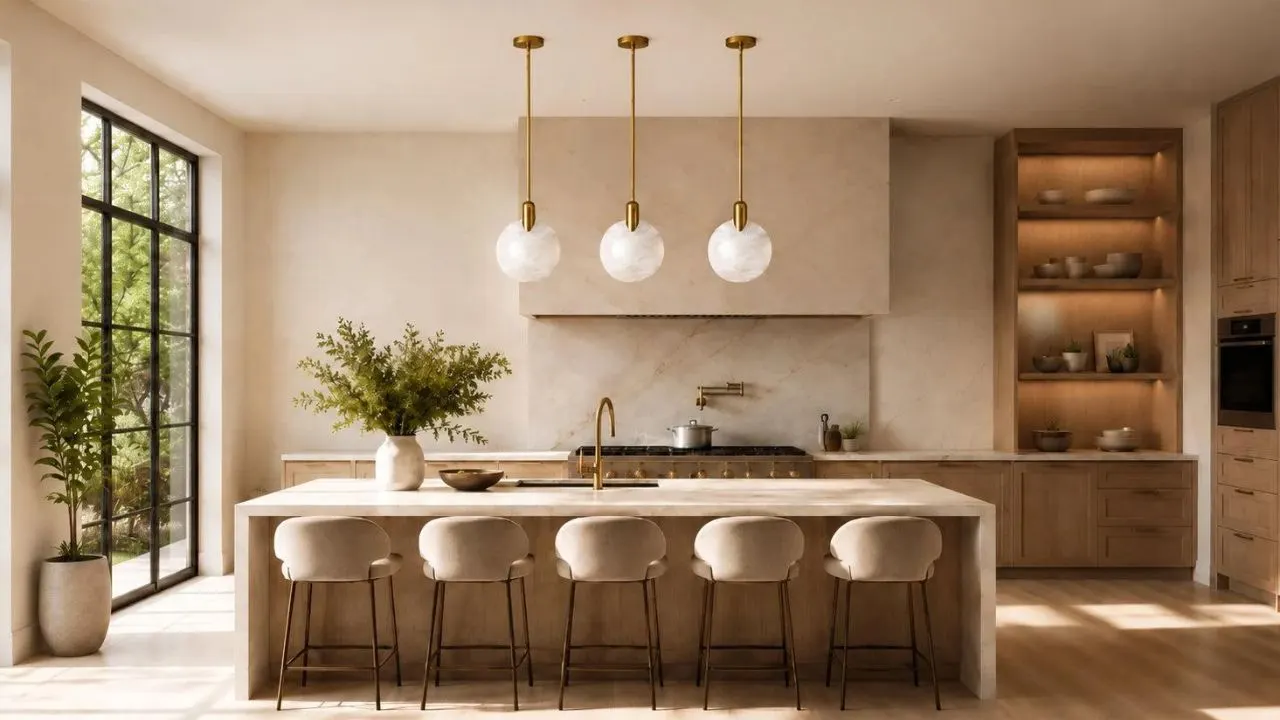
Choosing a pendant is only half the job. Pendant lighting height determines how well a fixture illuminates a surface, whether people can see across a room, and how balanced the finished space feels. Hang it too low and it may obstruct conversation or become a head-height hazard; hang it too high and the light can lose its visual connection with the table or countertop.
The right measurement depends on where the pendant will go. A fixture above a kitchen island or dining table is measured from the surface below, while an entryway pendant over an open walking area needs sufficient clearance from the floor. This guide explains the starting measurements, how to adjust them and what to consider before installation.
Pendant Lighting Height: Quick Measurement Guide
For most standard residential layouts, use these measurements as a starting point:
| Location | Starting measurement | Measure from |
|---|---|---|
| Kitchen island | 30–36 inches above the counter | Countertop to bottom of fixture |
| Dining table | 30–36 inches above the tabletop | Tabletop to bottom of fixture |
| Open entryway or walkway | Around 7 feet or more above the floor | Finished floor to lowest fixture point |
These are planning guidelines, not universal rules or a substitute for local requirements. Fixture dimensions, ceiling height, sightlines and the people using the room can all affect the final position. also recommends a 30–36-inch gap above a dining table or countertop, with the lower end often suiting 8-foot ceilings and the higher end working better with ceilings of 9 feet or more.
1. How High Should Pendant Lights Hang Above a Kitchen Island?
For a typical kitchen island, start with the bottom of the pendant approximately 30–36 inches above the countertop. Measure to the lowest part of the fixture, not the ceiling canopy or the point where the cord enters the shade.
This range gives the light a useful relationship with the work surface while helping preserve a clear view across the kitchen. If people regularly sit at the island, consider their seated eye level as well as the view from the standing position. A large shade that blocks the view between the kitchen and an adjoining living area may need to sit closer to the upper end of the range.
Adjust the height to your kitchen
The standard measurement is a starting point. Consider these details before settling on the final pendant lighting height:
- Ceiling height: With an 8-foot ceiling, begin near 30 inches above the counter. A taller ceiling may allow a slightly higher position.
- Fixture size: A wide or visually heavy shade can feel imposing when hung too low.
- Island use: A surface used for food preparation needs practical illumination and enough room to work comfortably.
- Seating: Check the sightline from each stool, not only from the kitchen floor.
- Multiple pendants: Keep the fixtures aligned and use consistent spacing so the arrangement looks intentional.
A useful example is a long island with two or three smaller pendants. Rather than choosing their position by eye, measure the island, mark its center and divide the length into equal sections. Lightology suggests dividing the island into one more segment than the number of pendants: for two fixtures, use three sections; for three fixtures, use four. The fixture centers can then be positioned at the division points.
Choosing a pendant style for an island
A pendant light kitchen island arrangement should suit both the dimensions of the counter and the visual character of the room. A modern globe pendant light can create a lighter, more open appearance, particularly when the shade is transparent or translucent. A glass globe hanging light may also preserve sightlines better than a large opaque shade, although its brightness and glare depend on the bulb, glass and fixture design.
For a softer, more contained look, drum pendant lighting can work above an island when the shade is correctly scaled. Check the shade diameter and the direction in which it releases light before choosing the final position.
2. How High Should a Pendant Hang Above a Dining Table?
Above a dining table, a common starting point is also 30–36 inches from the tabletop to the bottom of the pendant. This keeps the fixture visually connected to the table without placing it directly in the way of diners.
The best pendant lighting height for a dining room depends on how the table is used. A fixture may hang slightly lower for an intimate dining arrangement, provided it does not obstruct views or create uncomfortable glare. If the table is used for serving, homework or other activities, consider how the light will work beyond a formal meal.
Before finalizing the position, sit in the chairs around the table and check the view toward the opposite side. Look at the fixture from the room entrance too. A pendant should feel centered over the table, not simply centered in the ceiling.
Match the pendant to the table
Height is only one part of the decision. The fixture’s width and shape also matter.
- A round table often works well with one centered pendant.
- A long rectangular table may suit a linear fixture or a balanced group of smaller pendants.
- A large shade should leave enough visible tabletop around its edges.
- A cluster should be arranged around the table’s center rather than around an unrelated ceiling feature.
For a linear fixture, consider the table’s length and the amount of clearance at both ends. Lightology recommends allowing about 6 inches of breathing room on either side of a pendant above a dining table. The final size should still suit the table and the visual weight of the fixture.
Consider the material and shade
A clear glass pendant can keep a dining room feeling visually open, while a fabric or opaque drum shade creates a more defined shape above the table. A modern globe pendant light may suit a contemporary dining room, while drum pendant lighting can provide a softer silhouette.
The material does not determine the correct hanging measurement by itself. A large glass globe can still dominate a small table, and a compact opaque shade may feel unobtrusive. Compare the fixture’s actual width, height and light source before deciding.
3. How High Should a Pendant Hang in an Entryway?
An entryway is different from a kitchen island or dining room because there may be no surface directly underneath the pendant. Instead of measuring from a countertop or table, measure from the finished floor to the lowest point of the fixture.
For an open walkway or entry area, around 7 feet of floor clearance is a useful planning reference. Check the height of everyone who regularly uses the space, the location of the front door and whether the fixture sits above a route where people walk. A pendant should not interfere with the door swing, tall guests, carried items or movement through the entrance.
In a foyer with a double-height ceiling, the fixture can have a longer drop because there is more vertical space to work with. However, the lowest point still needs to maintain comfortable clearance wherever people pass. A tall ceiling is not a reason to let a pendant hang into the walking path.
Choosing an entryway pendant
The proportions of the foyer should guide the fixture choice. A compact entry may suit a small pendant or a simple globe, while a larger foyer can accommodate a more substantial fixture or a group of lights.
Think about the view from the front door and from nearby rooms. The pendant may be visible from several angles, so its shape and scale matter as much as its drop. If the entrance opens directly into a hallway, check the clearance along the entire route rather than measuring only at the center of the foyer.
4. How Ceiling Height Changes Pendant Placement
Ceiling height affects how a pendant relates to the room. A fixture that looks balanced above an island with an 8-foot ceiling may feel too close to the ceiling in a room with a much taller ceiling.
Start with the recommended clearance above the surface, then consider whether the fixture looks proportionate in the full room. Philips Hue suggests adding about 3 inches to the hanging distance for each additional foot of ceiling height above 8 feet. Treat this as a design reference rather than a mandatory formula: the correct position still depends on the room, the fixture and the people using the space.
For example, a pendant above a kitchen island in a room with a 10-foot ceiling may sit a little higher than one in an 8-foot room. But do not raise it so far that the light no longer feels connected to the counter. The same principle applies to dining rooms: preserve the relationship between the pendant and the table while maintaining comfortable sightlines.
5. Pendant Spacing, Scale and Alignment
A row of pendants needs to look like one considered arrangement. Uneven gaps or fixtures that are too large for the island can make the ceiling feel cluttered.
For multiple pendants, measure the full surface and plan the positions before installation. Keep the outer fixtures away from the edges, and check that the shades do not overlap visually. Lowe’s notes that spacing depends on fixture size, but around 18–24 inches between medium or larger pendants can be a useful starting point; some layouts use more. Philips Hue gives a broader 24–36-inch spacing reference.
These ranges are not interchangeable measurements for every fixture. Clarify whether a guide is describing the gap between shade edges or the distance between fixture centers. The diameter of each pendant changes how much open space remains between them.
A simple planning process:
- Measure the length and width of the island or table.
- Decide how many pendants the surface can comfortably support.
- Mark the centerline of the surface.
- Divide the length into balanced positions.
- Check the fixture diameter and the space between shades.
- Confirm that the arrangement looks centered from the main viewing angles.
6. Common Pendant Lighting Height Mistakes
Measuring from the ceiling instead of the surface: The important measurement above an island or table is the distance from that surface to the bottom of the fixture.
Ignoring the shade’s full dimensions: A long shade or exposed decorative element may hang lower than the bulb or socket. Measure the lowest point.
Choosing a height before selecting the fixture: A large drum shade and a small glass globe can occupy the same space very differently. Confirm the fixture dimensions first.
Forgetting seated sightlines: A pendant may look fine when standing but obstruct views when people sit at the island or dining table.
Using one measurement for every room: An island, dining table and open entryway have different requirements. Use the correct reference point for each location.
Assuming the guideline replaces installation requirements: Ceiling support, wiring, mounting hardware and local electrical requirements must be checked separately.
7. What to Check Before Installing a Pendant Light
Before installation, confirm the fixture’s overall height, shade diameter, adjustable cord or rod length, mounting method and weight. Check whether the ceiling box and support are suitable for the fixture. If the pendant is intended for a sloped ceiling, verify that its mounting system allows the required adjustment.
For a kitchen, confirm that the fixture will not interfere with cabinet doors or normal work. For a dining room, check that it is centered over the table rather than merely over the room. For an entryway, confirm adequate clearance along the walking route.
Electrical installation should follow the fixture manufacturer’s instructions and applicable local requirements. If wiring, ceiling support or compatibility is uncertain, have a qualified electrician assess the installation rather than improvising.
At Travertine Lighting, the modern home decor and lighting space, we believe good lighting decisions begin with the right proportions and a clear understanding of how a fixture will be used. Explore the design and dimensions of a pendant before deciding where it belongs; the most attractive option is one that works with the room as well as its style.
Frequently Asked Questions
Q. How high should pendant lights be above a kitchen island?
A common starting point is 30–36 inches from the countertop to the bottom of the pendant. Adjust within that range for ceiling height, fixture size, seating and sightlines.
Q. Should dining room pendants hang lower than kitchen island pendants?
Both commonly use a 30–36-inch starting range. A dining pendant may be positioned toward the lower end for a more intimate feel, as long as it does not block views or cause glare.
Q. How high should an entryway pendant be from the floor?
For an open walking area, around 7 feet of clearance from the floor to the lowest part of the fixture is a useful planning reference. Check the actual walking route, door clearance and the needs of the people using the space.
Q. Does ceiling height affect pendant lighting height?
Yes. Taller ceilings may call for a slightly higher position or a longer fixture drop to maintain visual balance. Always preserve the required clearance above the surface or floor.
Q. Can a glass globe pendant hang above a kitchen island?
Yes, if its dimensions, light output, mounting and placement suit the island. Check glare and bulb visibility as well as the pendant’s width and hanging height.
Final Takeaway
The most reliable way to plan pendant lighting height is to measure from the surface or floor to the lowest point of the fixture. Start with 30–36 inches above kitchen islands and dining tables, and use around 7 feet of clearance for open entryways as a practical reference. Then adjust for ceiling height, fixture size, seating, sightlines and the way the room is used. A carefully measured pendant will look more balanced and work more comfortably in everyday life.