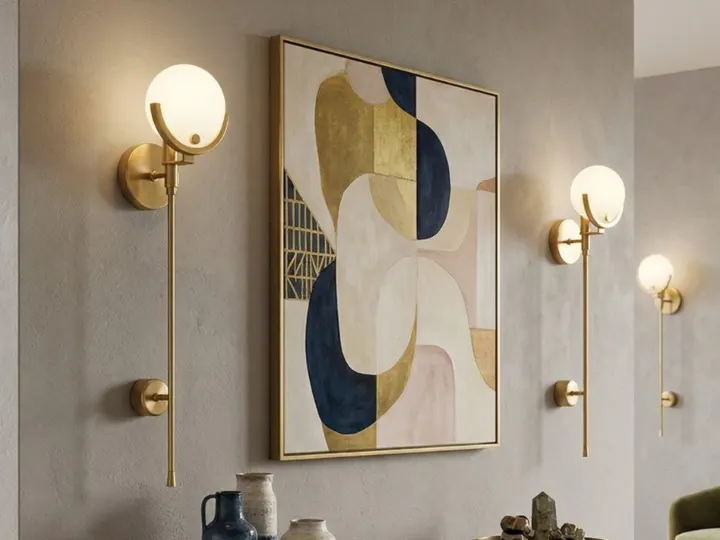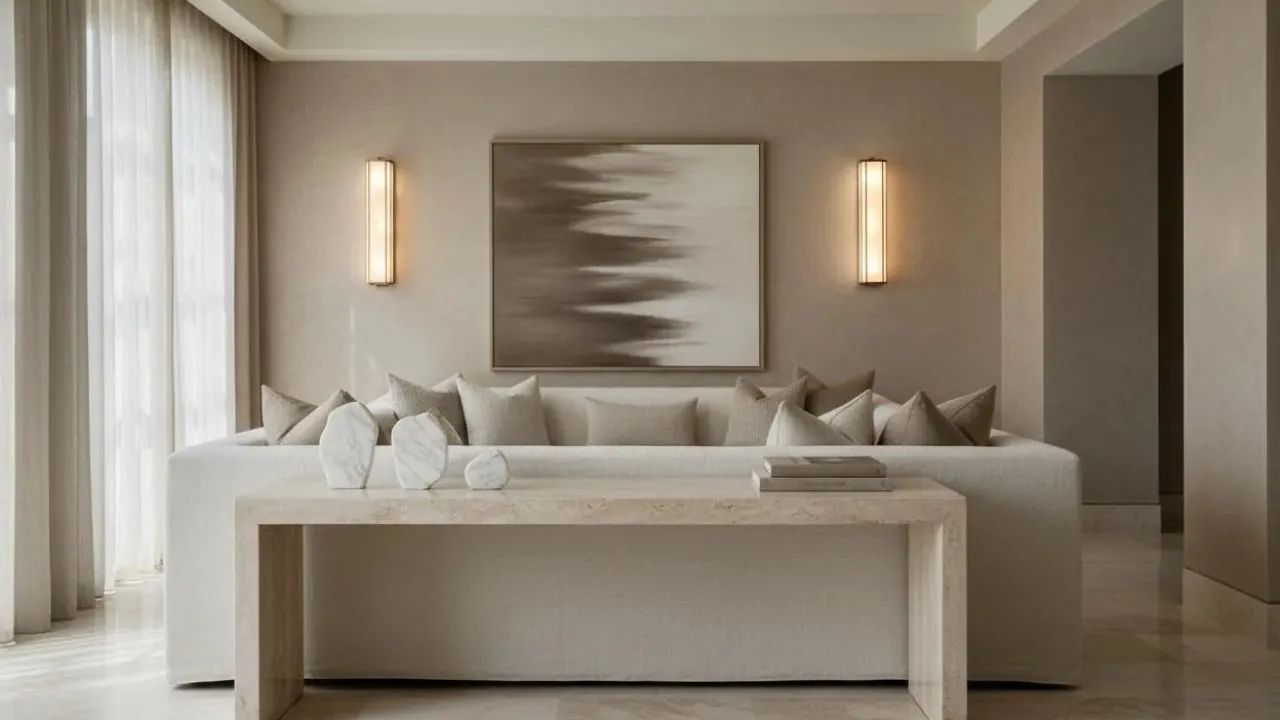
Brass wall sconces can add warmth, definition, and useful lighting to a modern home without taking up floor or table space. The right design can soften a minimalist room, bring contrast to a neutral wall, or create a focal point beside a mirror, bed, or piece of artwork. The key is choosing a shape, finish, and light direction that suit the space rather than selecting a fixture based on color alone.
Modern interiors are not limited to plain, geometric lighting. A brushed-brass cylinder can feel understated, while a sculptural brass fixture can become part of the room’s visual identity. Glass shades, adjustable arms, and rounded forms offer different ways to introduce brass wall sconces without making the design feel overly formal.
Below are 12 styles worth considering, along with practical guidance for choosing the right option for your home.
1. Minimalist Brass Cylinder Sconces
A cylindrical sconce is a straightforward choice for contemporary interiors. Its clean outline works with simple furniture, uncluttered walls, and restrained color palettes. Depending on the design, the fixture may direct light upward, downward, or in both directions.
Choose a narrow cylinder for a small hallway or a pair of matching fixtures to frame a doorway. On a textured plaster wall, the contrast between the smooth metal and uneven surface can add interest without requiring extra decoration.
Best for: Hallways, entryways, bedrooms, and minimalist living spaces.
What to check: Look at the fixture’s depth and light direction. A compact design is useful in a narrow passage where a projecting arm could obstruct movement.
2. Brass Sconces With Opal Glass Globes
Opal glass creates a softer appearance than a fully exposed bulb. Combined with a brass backplate or arm, it balances a warm metallic finish with a rounded, understated shade.
These brass wall sconces work particularly well beside a bed, above a small console, or in a living room with curved furniture. A globe can also soften interiors dominated by straight lines, rectangular mirrors, and angular cabinetry.
The globe’s size matters. A large shade can become the main feature on a narrow wall, while a smaller one may sit more comfortably beside artwork or a compact mirror.
Best for: Bedrooms, living rooms, and entryways.
What to check: Confirm whether the glass is opal, frosted, or simply described as white. These finishes can distribute light differently, and the fixture’s actual design determines how much light reaches the room.
3. Brass Sconces With Clear Glass Shades
Clear glass creates a lighter visual effect because the bulb remains visible. The bulb becomes part of the design, making this style suitable for interiors where lighting is meant to look decorative even when switched off.
A brass arm paired with clear glass can work with contemporary kitchens, dining nooks, and transitional interiors. It also complements black accents, natural wood, and neutral wall colors.
Because the light source is visible, bulb selection deserves attention. An exposed bulb that looks attractive in a product photograph may create glare at home if the fixture is positioned directly at eye level.
Best for: Kitchens, dining areas, and modern entryways.
What to check: Review bulb compatibility, permitted wattage, and whether the fixture accepts a dimmable bulb and compatible dimmer.
4. Brushed Brass Wall Sconces
Brushed brass has a more subdued appearance than a highly polished finish. Its softer reflection can work well in modern interiors where the goal is to introduce warmth without creating a mirror-like highlight on the wall.
Pair brushed brass with oak furniture, beige upholstery, warm white walls, or natural stone. It can also sit comfortably alongside matte black details, provided the finishes are balanced across the room.
This finish is especially useful when the fixture should support the overall design rather than dominate it.
Best for: Contemporary bedrooms, living rooms, and hallways.
What to check: Product descriptions sometimes use “brushed brass,” “satin brass,” and “brushed gold” differently. Check the manufacturer’s finish description and photographs rather than assuming these terms mean the same thing.
5. Polished Brass Statement Sconces
Polished brass reflects more light and draws attention to the fixture’s outline. It suits rooms where the wall light is intended to stand out, particularly against deep green, navy, charcoal, or warm neutral paint.
A polished finish can complement a contemporary room, but balance is important. If cabinet handles, mirrors, and other decorative elements are already highly reflective, another shiny fixture may make the space feel visually busy.
Use a distinctive polished-brass sconce as a deliberate accent rather than automatically repeating the finish on every wall.
Best for: Feature walls, formal entryways, and living rooms.
What to check: Confirm whether the product has a polished brass finish, brass plating, or another metal with a brass-colored coating. Appearance alone does not establish the underlying material.
6. Brass Swing-Arm Wall Sconces
Swing-arm sconces have a movable arm that lets the light source shift closer to or farther from the wall. This makes them practical where lighting needs change throughout the day.
Beside a bed, an adjustable arm can direct light toward a book without requiring a table lamp. In a reading corner, it can provide more targeted illumination while leaving a side table available for other items.
The adjustable mechanism also introduces more visual detail than a fixed fixture, so it can work particularly well in interiors that combine modern furniture with subtle industrial elements.
Best for: Reading corners, bedrooms, and home offices.
What to check: Measure the arm’s full extension and make sure it will not collide with a headboard, door, cabinet, or person moving through the space.
7. Brass Wall Sconces With Fabric Shades
A fabric shade softens the fixture’s appearance and helps diffuse the light. Brass provides structure, while linen or another suitable shade material introduces texture.
This combination works well in bedrooms and living rooms where lighting should feel comfortable rather than sharp. A neutral shade can coordinate with curtains and upholstery without requiring an exact color match.
Fabric-shaded brass wall sconces are also a useful option for interiors that mix contemporary furniture with traditional details. The silhouette should still suit the room: a simple tapered shade will generally look more restrained than an ornate, heavily decorated one.
Best for: Bedrooms, sitting areas, and transitional interiors.
What to check: Follow the manufacturer’s bulb and heat-clearance requirements. Confirm that the shade material is appropriate for the specified light source.
8. Sculptural Brass Wall Sconces
Sculptural sconces use an unusual profile, curved arm, geometric form, or carefully arranged components to make the fixture look like a decorative object.
This style suits interiors with simple backgrounds. For example, one distinctive brass fixture can add interest to a plain plaster wall without requiring a gallery of artwork or multiple accessories.
Sculptural designs vary considerably, so think about the whole shape rather than the brass finish alone. A rounded form may complement curved furniture, while an angular design may reinforce the lines of a contemporary console or built-in cabinet.
Best for: Entryways, living rooms, and feature walls.
What to check: Compare the fixture’s width and projection with the available wall space. A statement design needs room around it to remain visually clear.
9. Up-and-Down Brass Wall Sconces
Up-and-down sconces direct light toward both the ceiling and the floor or wall below. This creates two areas of illumination and can make a plain wall more visually interesting.
They are useful in hallways, beside entry doors, and on larger living-room walls. The effect depends on the beam pattern, wall color, fixture position, and surrounding lighting.
For a more restrained contemporary look, choose a compact fixture with a simple body. The light pattern can supply the visual interest without an elaborate shape.
Best for: Hallways, entryways, and architectural accent lighting.
What to check: Look at the manufacturer’s light-distribution information. Not every fixture creates the same beam width, and decorative wall illumination should not be assumed to provide all the room’s general lighting.
10. Brass Picture Lights and Art Sconces
Picture lights are designed to illuminate artwork, photographs, or other wall displays. Their elongated profile can also provide a strong horizontal accent above a framed mirror or carefully arranged gallery wall.
A brass finish pairs naturally with framed art, wood furniture, and neutral walls. It can make the lighting feel connected to the display rather than like an unrelated fixture.
Positioning matters more than the finish alone. The light should illuminate the intended surface without producing distracting reflections or uneven brightness.
Best for: Artwork, framed photographs, and selected feature displays.
What to check: Review the fixture’s intended mounting method, reach, and light distribution. For valuable artwork, consider the lighting source and its potential effect on the materials.
11. Small Brass Wall Sconces
Small brass wall sconces suit compact spaces where a large fixture would feel crowded. They can fit beside a narrow mirror, between wall cabinets, or on a limited section of hallway wall.
Their size does not automatically make them suitable for every task. A small decorative fixture may provide accent lighting rather than enough illumination for reading, grooming, or detailed work.
Think about the intended purpose before comparing dimensions. A compact light can be effective when it supplements overhead lighting, but it may not replace a stronger task light.
Best for: Small bedrooms, narrow hallways, compact entryways, and limited wall sections.
What to check: Compare the fixture’s dimensions with nearby furniture and verify its light output against the job it needs to perform.
12. Brass and Natural-Stone Wall Sconces
Brass paired with natural stone creates a contrast between warm metal and the texture of a mineral surface. Depending on the stone, the result can feel restrained, architectural, or more decorative.
Travertine and marble are two distinct material directions to consider. Travertine typically has a visibly porous, varied surface, while marble often has veining and a different visual character. The actual appearance depends on the selected stone and finish.
This combination can work beside a stone console, against textured plaster, or in a room that uses natural materials elsewhere. It is not necessary to match every surface exactly; a considered contrast can create a more balanced result.
Best for: Contemporary entryways, living rooms, and interiors built around natural materials.
What to check: Confirm the fixture’s actual materials, dimensions, weight, mounting requirements, and care instructions. Do not assume a product is made from solid stone or solid brass just because the finish resembles those materials.
How to Choose the Right Brass Wall Sconces
The most suitable design depends on the room, the type of light needed, and the fixture’s relationship with nearby objects. Before choosing a style, consider these five factors.
Match the fixture to the room’s purpose
A bedside reading light needs different functionality from a decorative hallway fixture. Adjustable arms and directed light can help with reading, while an up-and-down design may be more appropriate for highlighting a wall. For a vanity, look for a layout that supports useful illumination around the mirror.
Compare brass finishes
Polished brass creates a stronger reflection; brushed brass has a quieter appearance; aged or antique finishes introduce a more weathered character. Choose based on the overall palette and the appearance you want to maintain. A finish described as “brass” is not necessarily solid brass.
Check scale and projection
Measure the available wall area and consider the fixture’s width, height, and distance from the wall. Shallow designs can be practical in narrow hallways, while a larger sculptural fixture may need an open wall to look balanced. The Lowe’s wall-sconce buying guide also covers fixture size, styles, light direction, and installation considerations.
Choose suitable light quality
Consider brightness, color temperature, bulb type, and whether the fixture supports dimming. The U.S. Department of Energy’s LED Basics guide explains color appearance and color rendering, both of which affect how a light source presents objects and finishes. Select the light for the activity and atmosphere rather than choosing a bulb based only on wattage.
Confirm installation requirements
Check whether the sconce is hardwired, plug-in, or battery-operated, and confirm that the mounting arrangement suits your home. For bathrooms and outdoor locations, use only fixtures specifically rated for the intended environment and follow the manufacturer’s instructions. Consult a qualified electrician when wiring or location requirements are unclear.
How to Style Brass Wall Sconces in a Modern Home
Brass works best when it relates to the room without needing to match every metal detail exactly. Pair it with wood, stone, painted surfaces, glass, or darker accents to create contrast. Repeating the finish in one or two other elements can make the scheme feel considered, but a perfect match is not essential.
For a bedroom, place a pair of sconces around the headboard only if the wall dimensions and furniture arrangement allow comfortable spacing. In a hallway, consider how a sequence of fixtures looks from both ends of the passage. In a living room, use sconces to complement other light sources rather than relying on them automatically as the only illumination.
If you are comparing metallic finishes across a home, our related guide, How to Choose Gold Sconces for Every Room in Your Home, can help you consider gold-toned lighting by room and finish. Brass and gold-colored finishes can overlap visually, but product descriptions and underlying materials may differ, so check the specifications of each fixture.
Travertine Lighting focuses on lighting and natural-material design, making brass-and-stone combinations a relevant direction to explore when they suit your interior.
Final Takeaway
The best brass wall sconces are the ones that suit the room’s proportions, provide the right kind of light, and complement the materials already in the space. Minimalist cylinders and small fixtures work well where space is limited; glass globes and fabric shades soften the look; swing arms serve practical tasks; and sculptural or natural-stone designs can create a stronger focal point.
Compare the finish, light distribution, dimensions, installation method, and material details before buying. With those factors settled, choosing a design becomes less about following a trend and more about finding a fixture that genuinely belongs in your home.
Frequently Asked Questions
Q. Are brass wall sconces suitable for modern interiors?
Yes. Simple cylinders, globe shades, swing arms, and sculptural designs can all complement modern interiors. The best choice depends on the fixture’s shape, finish, scale, and relationship with the surrounding furniture.
Q. Should I choose brushed or polished brass?
Choose brushed brass for a softer, less reflective appearance and polished brass when you want a brighter accent. Also check whether the finish is lacquered, plated, or another surface treatment, because these details affect its appearance and maintenance.
Q. Can brass wall sconces be used in bathrooms?
Only when the specific fixture is rated for the intended bathroom location and installed according to its instructions and applicable electrical requirements. Do not assume every indoor wall sconce is suitable for damp or wet areas.
Q. Do wall sconces provide enough light on their own?
That depends on the fixture’s output, beam direction, room size, wall finishes, and activities. Many sconces are best used as part of a layered lighting plan that also considers ambient and task lighting.
Q. What should I measure before buying a sconce?
Measure the available wall space and check the fixture’s height, width, projection, mounting position, and distance from doors, mirrors, furniture, and walkways. For adjustable fixtures, measure the full extension as well.