Gold sconces can add warmth, definition, and useful lighting to a room without taking up space on a table or floor. The right design might frame a bathroom mirror, create a softer glow beside a bed, or bring balance to an entryway console. But choosing the right fixture involves more than picking a gold finish. Size, brightness, light direction, installation requirements, and the room’s existing materials all influence how well a sconce works.
For US homes, the best gold sconces are the ones that suit both the room’s design and its practical lighting needs. A brushed-gold fixture may complement a calm, contemporary interior, while an antique-brass design can add depth to a traditional space. This guide explains how to choose the right style for each room, coordinate finishes, and check essential details before purchasing.
What to Consider Before Choosing Gold Sconces
Before comparing shapes and finishes, decide what the light needs to do. Is it meant to illuminate a face at a vanity, provide reading light, highlight artwork, or create a welcoming atmosphere in a hallway? That answer narrows the options considerably.
Start with these five checks:
- Purpose: Decide whether you need ambient, task, or accent lighting.
- Scale: Compare the fixture’s height and width with the wall, mirror, headboard, or artwork nearby.
- Light direction: Choose upward, downward, adjustable, or diffused light according to the task.
- Finish: Consider whether polished gold, brushed gold, or antique brass fits the room.
- Installation: Check whether the fixture is hardwired or plug-in, whether its bulb is replaceable, and whether it is rated for the intended location.
Gold is a finish, not a lighting specification. Two fixtures can look similar while producing very different amounts and directions of light. Review the product details instead of choosing by appearance alone.
1. Gold Sconces for the Living Room
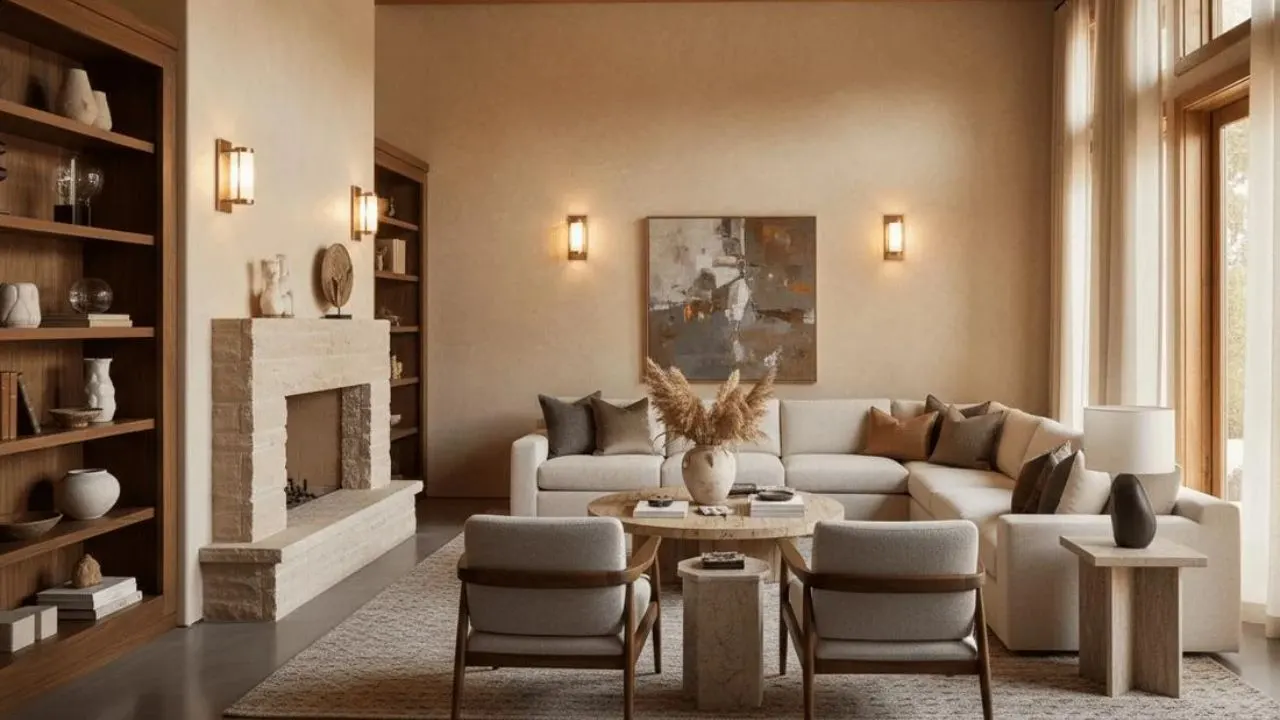
In a living room, wall lighting can fill darker areas, highlight architectural details, or create a comfortable atmosphere after sunset. Gold sconces work well beside a fireplace, near a sofa, or on either side of a large artwork or mirror.
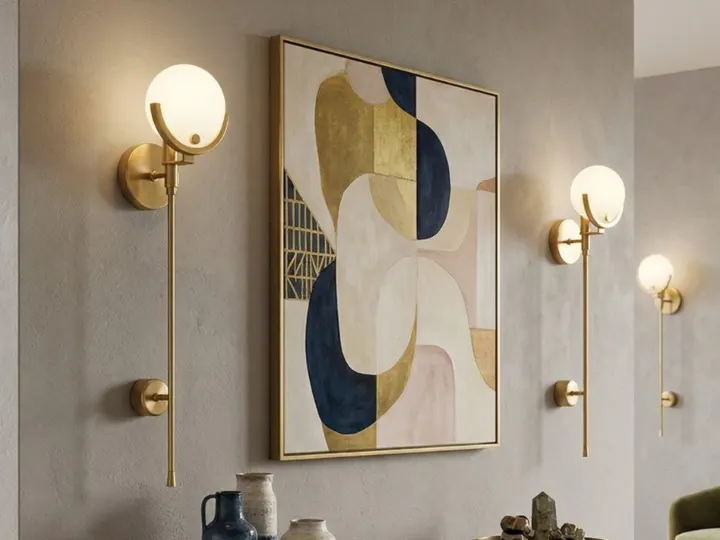
For a modern interior, consider a slim brass modern sconce with a clean silhouette. A sculptural sconce can provide more visual interest on a plain wall, while a glass shade can soften the appearance of the metal.
Think about what sits below the fixture. A sconce beside a sofa should not interfere with people sitting or standing, and a fixture near artwork should illuminate the display without creating distracting glare. On a wide wall, a balanced pair may look more intentional than one small light.
Gold sconces should usually complement the room’s existing lighting rather than replace it. Combine them with suitable ceiling lights, table lamps, or floor lamps so the room has more than one source of illumination.
2. Gold Sconces for the Bedroom
Bedrooms benefit from lighting that can shift from practical to relaxing. Gold sconces beside the bed are particularly useful when you want to free up space on bedside tables or create a balanced arrangement around the headboard.
Choose adjustable or downward-directed lights if you read in bed. If the main goal is a soft evening atmosphere, look for a diffused shade that reduces direct glare. A dimmable fixture can also help you adapt the brightness, provided the bulb, driver, and dimmer are compatible.
The placement should work with your actual bed height and how you sit or lie down. Before buying, measure the headboard and bedside furniture, then check the fixture’s projection from the wall. An oversized design may crowd a narrow bedside area, while a very small fixture can look lost against a tall headboard.
For a contemporary bedroom, simple gold sconce lights with opal glass or a restrained cylindrical form can provide a visual accent without competing with bedding, artwork, or textured walls.
3. Gold Sconces for Bathrooms and Vanities
Bathroom lighting needs careful planning because it affects both grooming and the room’s appearance. Gold sconces on either side of a mirror can help illuminate the face more evenly than relying on a single overhead source. The final arrangement depends on mirror width, fixture dimensions, and the available wall space.
For a single vanity, start by checking whether two fixtures can fit comfortably beside the mirror. For a double vanity, consider how the lights will align with the mirrors and sinks. Diffused glass can help soften light, while exposed bulbs may create glare depending on their position and brightness.
Safety comes before finish: choose fixtures specifically rated for the bathroom location. UL’s guidance on environmental location markings for luminaires explains the distinction between dry, damp, and wet-location suitability. A gold finish does not automatically make a fixture appropriate for a humid room or a location exposed to water. Follow the product instructions and applicable electrical requirements, and consult a qualified electrician where necessary.
A modern bathroom sconce in gold can coordinate with warm metal faucets or cabinet hardware, but the fixture’s rating and light quality should determine the final choice.
4. Gold Sconces for Hallways
Hallways often have limited floor space and few opportunities for decorative lighting. Wall fixtures can add visual rhythm along a long corridor while keeping the floor clear.
For a narrow hallway, choose a slim design with limited projection so people can pass comfortably. Upward or diffused lighting can soften a blank wall, while a directional fixture can help illuminate a particular feature. If you install several gold sconces along one corridor, keep their placement consistent and consider the distance between fixtures.
Avoid choosing a large fixture simply because the wall looks empty. Measure the corridor width, ceiling height, and available wall space first. A series of smaller fixtures may create a cleaner result than a few oversized lights.
Gold sconces can also work with white walls, natural wood, muted paint colors, and darker accent walls. Repeating the gold finish in a mirror frame, door hardware, or another small detail helps the arrangement feel considered without requiring every metal in the hallway to match.
5. Gold Sconces for Entryways and Foyers
The entryway establishes the mood of a home, and lighting can make the area feel more welcoming. A pair of gold sconces can frame a console table, mirror, or architectural feature. In a smaller foyer, one well-positioned fixture may be sufficient.
Match the scale of the light to the furniture beneath it. A large statement sconce may suit a spacious foyer with high ceilings, while a small brass sconce can be a better choice beside a compact console. Check that the fixture does not interfere with a door swing, coat hooks, or everyday movement.
If the entryway has a mirror, think about the reflection before deciding on the bulb and shade. A bare, bright bulb can be uncomfortable when seen directly or reflected. Diffused light may be a better option where people check their appearance before leaving.
For covered porches or exposed exterior walls, do not assume an indoor gold sconce is suitable. Confirm that the specific fixture is listed for the outdoor conditions in which it will be installed.
6. Gold Sconces for Dining Rooms
In a dining room, wall lights can complement a pendant or chandelier and help make the space feel layered rather than uniformly bright. Consider placing sconces near artwork, a sideboard, or a feature wall, with their position coordinated to the furniture and room layout.
Gold sconce lighting can pair with wood furniture, stone surfaces, neutral walls, and upholstered dining chairs. A glass shade gives a lighter appearance, while a solid metal shade can create a more defined beam.
Think about the relationship between the wall lights and the dining table. The sconces should support the atmosphere without producing distracting glare for people sitting across from each other. If the room is used for meals and entertaining, dimmable lighting can be helpful when all components are compatible.
7. Gold Sconces for Kitchens
Kitchen wall lighting should have a clear purpose. It may provide accent lighting on a feature wall, illuminate a breakfast nook, or complement lighting above a sideboard. It should not be treated as a substitute for adequate task lighting over counters and work areas.
A compact gold wall sconce can work beside open shelving or near a small dining area. A directional wall sconce may suit a specific display or corner, but its beam should be aimed to avoid glare. Check the fixture’s cleaning requirements if it will be installed where cooking residue may accumulate.
Coordinate the metal finish with cabinet pulls, faucet hardware, or pendant lights. These elements do not have to match exactly, but repeating a finish or staying within a related warm-metal family can create visual consistency.
8. Gold Sconces for Artwork and Accent Walls
Wall sconces can draw attention to artwork, textured plaster, decorative panels, or a special architectural feature. The best design depends on what you want to highlight.
A directional or picture-light-style fixture can focus attention on art, while a diffused sconce can create a wider pool of light on the wall. Before installation, check the artwork’s dimensions, the fixture’s beam direction, and whether the light source may cause glare on glass.
For a gallery-like arrangement, keep the relationship between the artwork and lighting deliberate. A fixture that is too large may compete with the piece, while one that is too small or poorly aimed may not illuminate it effectively.
Gold sconces are especially useful when their finish echoes a frame or another warm detail in the room. The goal is to make the lighting feel connected to the display, not to overwhelm it.
How to Choose the Right Gold Finish
Gold is not one uniform color. Finish names vary between manufacturers, so compare product photographs and specifications rather than relying on the label alone.
- Polished gold: Reflective and noticeable; can suit interiors with crisp lines and glossy details.
- Brushed gold: More subdued in appearance; useful when you want a warm metal without a highly reflective surface.
- Antique brass: Usually deeper and more traditional in character; can complement wood, warm neutrals, and vintage-inspired interiors.
- Gold with glass: Combines a warm metal detail with a shade that may diffuse or direct light, depending on its design.
- Gold with natural stone: Travertine or marble can introduce texture and variation, making the fixture feel more sculptural.
For a cohesive interior, repeat the selected finish in one or two other places, such as a mirror frame, cabinet pulls, or a decorative object. Exact matching is not essential. The finishes simply need to look intentional together.
Brightness, Bulbs, and Light Quality
The fixture’s appearance is only part of the decision. Check the light output, bulb type, color temperature, and dimming compatibility before purchasing. A decorative sconce may create a pleasant accent but still be too dim for reading or grooming.
The U.S. Department of Energy’s guide to LED basics explains that LED performance includes both energy efficiency and light quality. For home use, consider how the light will render colors, how bright it needs to be, and whether you want a warm or cooler appearance. Warm white light is often chosen for relaxing living spaces, while task areas may require a different balance.
Architectural Digest’s guide to mood lighting discusses layering ambient, task, and accent lighting. Applying that approach means using gold sconces as one part of a wider lighting plan instead of expecting them to illuminate an entire room by themselves.
If a fixture uses an integrated LED source, check whether its light source or driver can be replaced and whether dimming is supported. If it uses a replaceable bulb, confirm the correct base, maximum wattage, and any enclosure restrictions.
Common Mistakes to Avoid
Choosing by finish alone: Gold may look right in a photograph, but the fixture can still provide the wrong light for the room. Check the beam direction and specifications.
Ignoring proportions: Compare fixture dimensions with the mirror, headboard, furniture, and available wall area before ordering.
Using indoor fixtures outdoors: Exterior conditions require the correct location rating. Confirm suitability for rain, moisture, and the exact mounting position.
Expecting sconces to do every lighting job: Wall lights are often best combined with overhead or portable lighting.
Mixing too many finishes without a plan: Different metals can work together, but repeat accent finishes thoughtfully so the room does not feel random.
Skipping installation details: Confirm whether the fixture is hardwired or plug-in, whether the electrical box and wiring suit the installation, and whether professional installation is needed.
A Pre-Purchase Checklist for Gold Sconces
Before you order, answer these questions:
- What job will the light perform: ambient, task, or accent?
- Do the fixture’s dimensions suit the wall and nearby furniture?
- Is the light directed where it needs to be?
- Does the finish coordinate with the room?
- Is the fixture rated for its intended location?
- Are the bulb, LED source, and dimmer compatible?
- Does installation require new wiring or a qualified electrician?
- Have you checked the product’s dimensions, specifications, and care instructions?
Travertine Lighting can be a relevant place to explore if your design direction includes natural stone, sculptural forms, or warm finishes. Compare the actual dimensions, materials, light output, and installation details of each fixture before making a decision.
Final Takeaway
There is no fixed number. Consider the room’s size, existing lighting, wall layout, and the purpose of each fixture. A pair may frame a mirror or bed, while a single sconce may be enough for a small accent area.
Frequently Asked Questions
Q. Are gold sconces suitable for modern homes?
Yes. Simple geometric forms, brushed finishes, and clean-lined glass designs can work well in contemporary interiors. The best choice depends on the room’s other materials and the type of light required.
Q. Should gold sconces match faucets and cabinet hardware?
Not necessarily. Matching creates a coordinated look, while a carefully repeated accent finish can work alongside other metals. Consider the room as a whole rather than matching every item individually.
Q. Can I use gold sconces in a bathroom?
Only when the specific fixture is rated for the intended bathroom location. Check its damp- or wet-location marking, follow installation instructions, and confirm local electrical requirements.
Q. Are gold sconces good for bedrooms?
They can work well beside a bed, particularly when you need to free up bedside-table space. Choose adjustable or suitably directed light for reading and a diffused or dimmable option for a softer atmosphere.
Q. How many gold sconces should I use in a room?
The best gold sconces combine the right finish with suitable proportions, useful light, and safe installation. Start with the room’s purpose, compare fixture dimensions and light direction, and confirm location ratings before buying. A thoughtful choice will work with your interior rather than simply adding another decorative object to the wall.