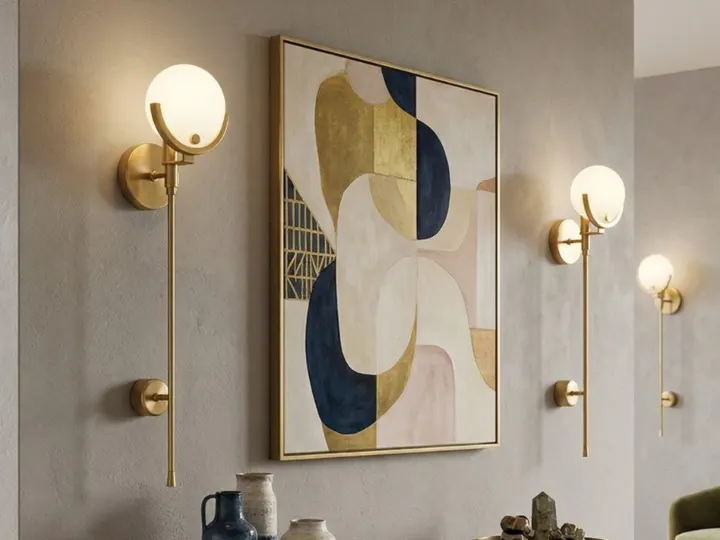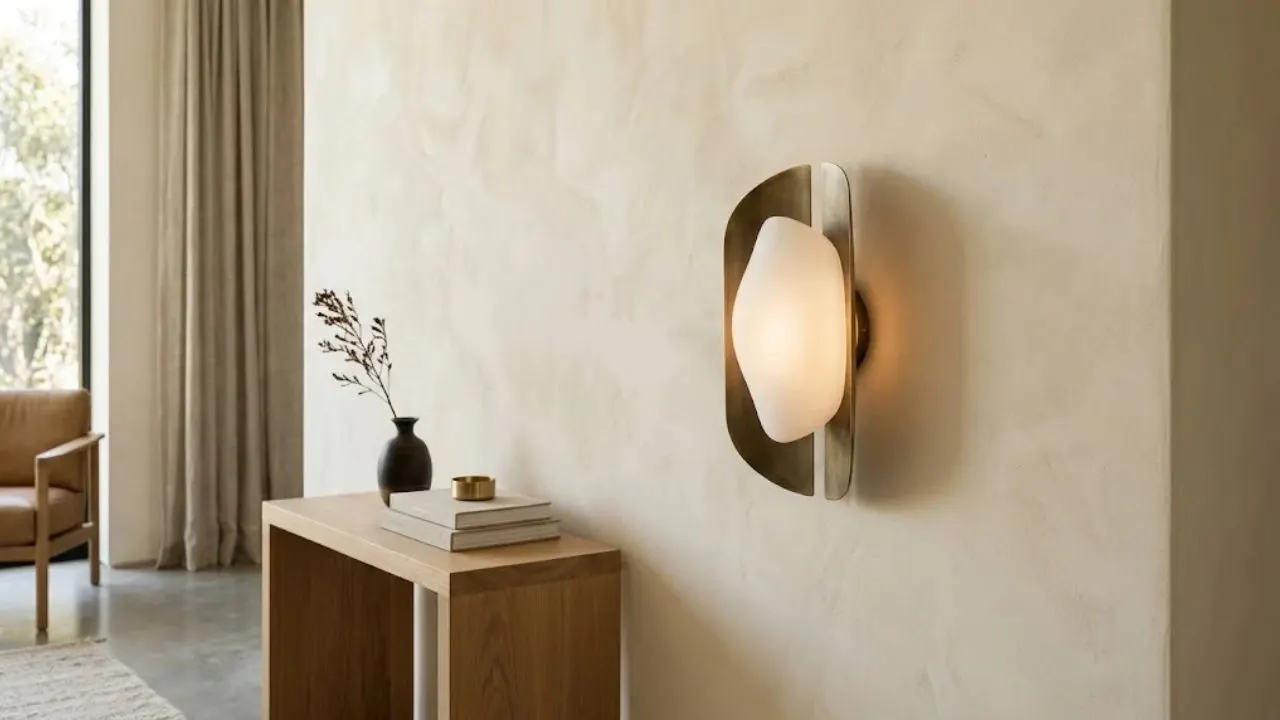
If you have ever noticed a decorative light mounted beside a bed, framing a bathroom mirror, or illuminating a hallway, you have probably seen a wall sconce, but what is a sconce light fixture, and how is it different from other types of lighting? A sconce is a light fixture attached to a wall rather than suspended from a ceiling or placed on furniture. Depending on its design, it can provide ambient illumination, focused task lighting, or accent lighting that highlights architectural details.
For homeowners exploring modern home décor, a sconce offers a practical way to introduce light at wall level without taking up valuable floor or table space. At Travertine Lighting, our focus is modern home décor and lighting, including contemporary styles that connect natural-looking materials, thoughtful forms, and everyday interior design. Understanding how sconces work makes it easier to choose a fixture that suits your room, lighting needs, and preferred aesthetic.
What Is a Sconce Light Fixture and How Does It Work?
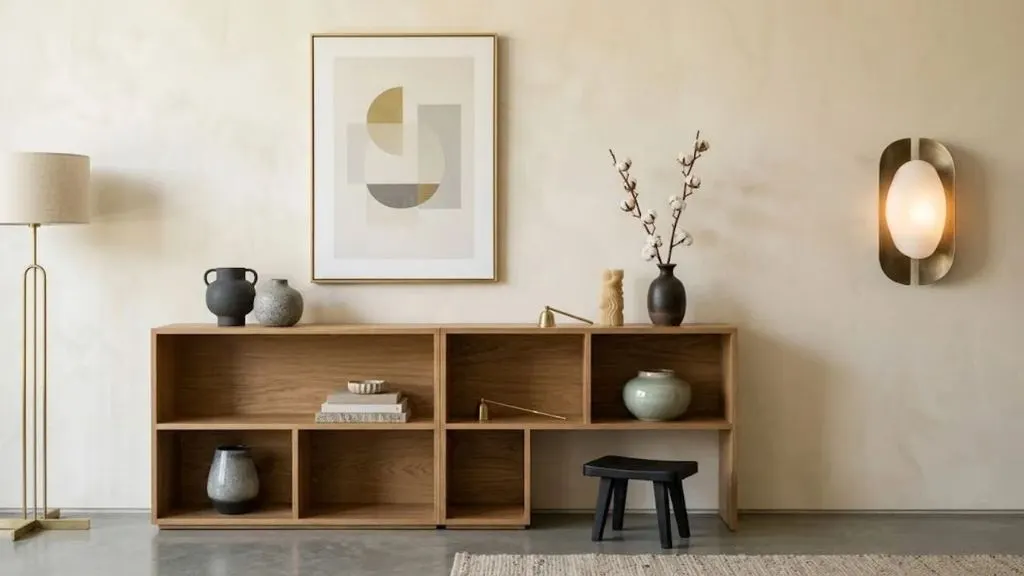
A sconce light fixture is a wall-mounted lighting unit designed to hold or incorporate a light source. It commonly includes a wall plate, a fixture body, and a shade, diffuser, or exposed light source. The precise construction varies by design.
Unlike a pendant light that hangs from the ceiling, a wall sconce attaches to a vertical surface. Its light may point upward, downward, outward, or in several directions. Some designs distribute light through a translucent shade, while others use a more directional beam.
The answer to what is a sconce light fixture becomes clearer when you consider its role in a lighting plan. A sconce is not simply decoration attached to a wall. It can illuminate a particular area, soften shadows, provide convenient bedside lighting, or emphasize the texture of a wall.
For example, a wall light beside a reading chair may provide localized illumination, while a pair of decorative sconces can frame artwork or create visual balance around a fireplace. Whether the fixture supplies enough light for a particular activity depends on its output, distribution, placement, and the room’s other light sources.
What Is the Difference Between a Sconce and Other Light Fixtures?
Understanding fixture categories helps prevent buying the wrong type of lighting.
| Fixture type | Where it mounts | Typical purpose |
|---|---|---|
| Wall sconce | Wall | Ambient, accent, or task lighting |
| Pendant light | Suspended from ceiling | Focused or general lighting over a defined area |
| Chandelier | Ceiling | Decorative and general illumination |
| Flush-mount light | At or close to ceiling | General room lighting |
| Table lamp | Table or other surface | Localized ambient or task lighting |
| Floor lamp | Floor | Ambient or task lighting |
| Picture light | Usually above artwork | Highlighting a picture or display |
A sconce is one type of wall light, although the terms wall light, wall lamp, and wall sconce are often used interchangeably in product listings.
If someone asks what is a sconce light fixture compared with a ceiling light, the key difference is its mounting position and the way it contributes to the room. A ceiling fixture often provides broader illumination, while a sconce can add light at eye level, create contrast on a wall, or illuminate a particular zone.
Neither type automatically replaces the other. Many rooms benefit from a combination of ceiling lighting, wall sconces, and lamps.
What Are the Main Types of Wall Sconces?
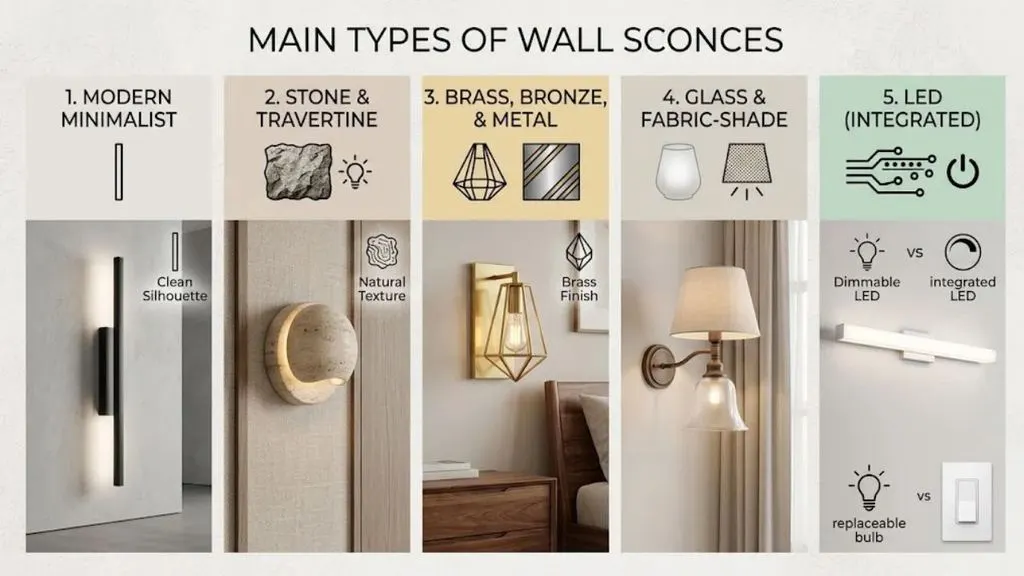
Wall sconces come in many shapes, finishes, and materials. The right option depends on the desired appearance and how the light will be used.
1. Modern minimalist wall sconces
Modern minimalist wall sconces use relatively simple forms, restrained detailing, and clean silhouettes. Metal, glass, ceramic, and stone-inspired finishes may appear in these designs.
A slim vertical sconce can complement a narrow hallway, while a rounded fixture may soften a room with straight architectural lines. Choose the proportions based on the wall and surrounding furniture rather than selecting a style in isolation.
2. Stone and travertine wall sconces
Stone wall sconces introduce visual texture and a material-focused design element. Travertine, marble, and stone-look finishes can create different appearances, so buyers should confirm the actual construction rather than relying on a product title alone.
A documented travertine wall sconce may suit interiors featuring neutral plaster, wood, linen, or other natural textures. In a room that already has heavily patterned stone and textured walls, a simpler fixture shape may create a more balanced composition.
Travertine Lighting focuses on modern home décor and lighting, making natural-stone-inspired wall lighting a relevant part of the wider design conversation. When choosing a particular product, review its listed material, dimensions, finish, and lighting specifications before deciding whether it suits your space.
3. Brass, bronze, and metal sconces
Brass and bronze wall sconces introduce metallic finishes that can complement wood furniture, neutral walls, or darker interiors. Black metal fixtures can create a sharper contrast, while polished or brushed finishes produce different visual effects.
The finish alone does not determine light quality. Shade design, bulb choice, and beam direction affect how the fixture illuminates the room.
4. Glass and fabric-shade sconces
Glass sconces can diffuse light or expose the light source, depending on the glass and fixture design. Fabric-shade sconces may soften direct glare, but their suitability depends on the fixture’s construction and the manufacturer’s requirements.
When deciding what is a sconce light fixture for your particular interior, consider both its appearance when switched off and the effect it produces when illuminated.
5. LED wall sconces
LED wall sconces use light-emitting diodes as their light source. Some contain integrated LEDs, while others accept replaceable bulbs.
Check whether the light source is replaceable, whether dimming is supported, and what brightness and color temperature the manufacturer specifies. Not every LED fixture is dimmable, and not every bulb works with every fixture or dimmer.
Where Should You Use Wall Sconces?
The most suitable placement depends on the activity, room dimensions, furniture layout, and fixture specifications.
| Room or area | Potential use | What to consider |
|---|---|---|
| Bedroom | Bedside illumination or decorative framing | Reading needs, glare, bed height, and switch access |
| Living room | Accent lighting or additional ambient light | Seating layout, existing lamps, and beam direction |
| Hallway | Improving visibility and breaking up long walls | Clearances, spacing, and even distribution |
| Entryway | Welcoming light near the entrance | Door swing, surrounding architecture, and intended use |
| Dining room | Adding light near a dining area or artwork | Relationship to the table, pendant lighting, and reflections |
| Bathroom | Mirror-area or general wall lighting | Verified damp-location suitability and electrical requirements |
| Staircase | Illuminating wall areas along the route | Glare, shadows, mounting position, and safe visibility |
| Reading nook | Localized reading light | Beam direction, output, and adjustable positioning where available |
A bathroom sconce is not automatically suitable for installation near a shower or another wet area. Verify the manufacturer’s location rating and applicable local electrical requirements before choosing a fixture for these spaces.
Bedroom wall sconces
Bedside sconces can free up nightstand space for books, glasses, or other essentials. For reading, look for a fixture that directs useful light toward the reading area without shining directly into your eyes.
A decorative sconce may create atmosphere but may not provide enough focused illumination for reading. Check the fixture’s output and light distribution before relying on it as a task light.
Living room and hallway sconces
In living rooms, sconces can highlight architectural features, complement artwork, or add a lower layer of light when the ceiling fixture feels too dominant.
In hallways, the objective is more than decoration. Fixtures should support comfortable visibility without producing distracting glare or leaving large areas in shadow. The appropriate number and spacing depend on the corridor’s length, wall layout, mounting height, and light distribution.
How Do You Choose the Right Sconce Light Fixture?
A practical selection process starts with the job the fixture needs to perform.
1. Decide on the lighting purpose
Determine whether you need ambient, accent, or task lighting. Ambient lighting contributes to the general illumination of a space. Accent lighting draws attention to a feature. Task lighting supports an activity such as reading.
One fixture may serve more than one purpose, but its suitability should be judged from its actual characteristics.
2. Check brightness in lumens
Lumens measure light output, whereas watts measure electrical power consumption. A higher wattage does not automatically mean a fixture will appear brighter.
The U.S. government’s ENERGY STAR brightness guide explains how to compare light output when selecting lighting products. For a sconce, consider the fixture’s lumen rating alongside beam direction, shade design, room size, and other lighting.
If the product listing does not specify lumens, do not assume a brightness level based on its appearance in a photograph.
3. Understand color temperature
Color temperature is commonly expressed in kelvins (K). Lower values generally appear warmer, while higher values appear cooler.
Warm white lighting is often chosen for bedrooms and relaxed living spaces. More neutral or cooler light may suit particular work areas or contemporary interiors, depending on the overall design.
The U.S. Department of Energy’s guidance on energy-efficient light bulbs explains color temperature, brightness, and other useful specifications. When choosing a sconce, consider how its light will interact with wall colors, wood, textiles, and nearby fixtures.
4. Match the material to the interior
Travertine, marble, brass, glass, and other finishes each create different visual effects. Natural stone can feature variations in color and surface texture, while a stone-look finish may imitate those characteristics using another material.
Confirm whether a product is genuine natural travertine, another stone, a composite, or a stone-look finish. Do not assume that two visually similar sconces have the same material composition or maintenance requirements.
5. Measure the wall and surrounding area
Check the fixture’s height, width, projection from the wall, and any required clearance. Consider doors, mirrors, artwork, furniture, and nearby circulation routes.
A large sconce may overwhelm a narrow wall, while a very small fixture can appear visually insignificant on a broad surface. The objective is proportion, not simply choosing the largest or most decorative option.
6. Verify mounting and electrical compatibility
Determine whether the sconce is hardwired, plug-in, or battery-operated. Review voltage, bulb base, maximum permitted wattage where applicable, dimming compatibility, mounting requirements, and any location-specific rating supplied by the manufacturer.
For hardwired fixtures, unfamiliar wiring, or uncertain mounting conditions, consult a qualified electrician. The Electrical Safety Foundation International’s electrical safety guidance recommends professional help for electrical work beyond a person’s capabilities.
Common Mistakes When Buying Wall Sconces
Even a visually attractive fixture can disappoint when its practical requirements are overlooked.
- Choosing appearance over function: A decorative fixture may not supply enough light for reading or other detailed tasks.
- Ignoring dimensions: A fixture’s projection from the wall can affect clearance around beds, doors, and walkways.
- Assuming watts equal brightness: Compare lumens rather than using wattage alone.
- Assuming all stone fixtures use natural stone: Check the documented material and construction.
- Assuming every LED sconce is dimmable: Confirm compatibility for the complete fixture and control system.
- Using an indoor fixture in a wet location: Verify the manufacturer’s suitability and the relevant electrical requirements.
- Treating one mounting height as universal: Placement depends on the fixture, ceiling height, intended use, furniture, and light distribution.
These checks make it easier to understand what is a sconce light fixture in practical terms: a wall-mounted light that must meet both the room’s design goals and its actual lighting requirements.
How Travertine Lighting Fits Into Modern Home Décor
Travertine Lighting is a modern home décor and lighting brand focused on helping customers explore lighting and interior styles. Stone-inspired wall lighting can work particularly well in design schemes that use restrained colors, tactile materials, and simple architectural forms.
When browsing travertine wall sconces, stone wall lights, or other contemporary wall lighting, compare each product’s documented material, dimensions, light source, and intended installation environment. These details matter as much as the finish when deciding whether a fixture belongs beside a bed, along a hallway, or in a living room.
Explore the relevant Travertine Lighting collection when you are ready to compare available designs. Review the individual product details rather than assuming every product shares the same material or electrical specifications.
Final Takeaway
Understanding what is a sconce light fixture helps you make a better decision about wall lighting. Sconces can add useful illumination, frame architectural features, and complement modern interiors without occupying floor or table space.
Choose the fixture according to its intended function, light output, material, dimensions, and installation requirements. For contemporary interiors, Travertine Lighting offers a relevant starting point for exploring modern home décor and lighting styles, including stone-inspired designs. Before purchasing any particular fixture, verify its actual product specifications and make sure they suit your room.
Frequently Asked Questions
Q. What is a sconce light fixture used for?
A sconce is used for ambient, task, or accent lighting from a wall. Common applications include bedside reading, hallway illumination, bathroom mirror lighting, and highlighting architectural features.
Q. Is a wall sconce the same as a wall light?
The terms often overlap. A wall sconce is a type of wall-mounted light fixture, although some wall lights, such as specialized picture lights, may be classified separately by their design or purpose.
Q. Can wall sconces replace ceiling lights?
Sometimes they can provide much of the needed illumination in a particular area, but that depends on the fixture’s output, distribution, and room layout. A sconce should not be assumed to replace adequate general lighting in every room.
Q. Are travertine wall sconces made from genuine stone?
Not necessarily. A product may use genuine travertine, another natural stone, a composite material, or a stone-look finish. Check the product’s documented material description before buying.
Q. Are LED wall sconces dimmable?
Some are, but not all. Confirm the manufacturer’s dimming specifications and compatibility with the intended bulb, driver, and dimmer.
Q. How do I choose the right size wall sconce?
Measure the available wall area and check the fixture’s height, width, projection, and required clearance. Consider the furniture, ceiling height, and the visual balance of the surrounding space.
Q. Can I install a sconce in a bathroom?
Only when the fixture is rated for the intended location and installed in accordance with applicable electrical requirements. A general indoor rating does not establish suitability for wet or damp areas.